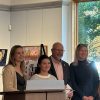
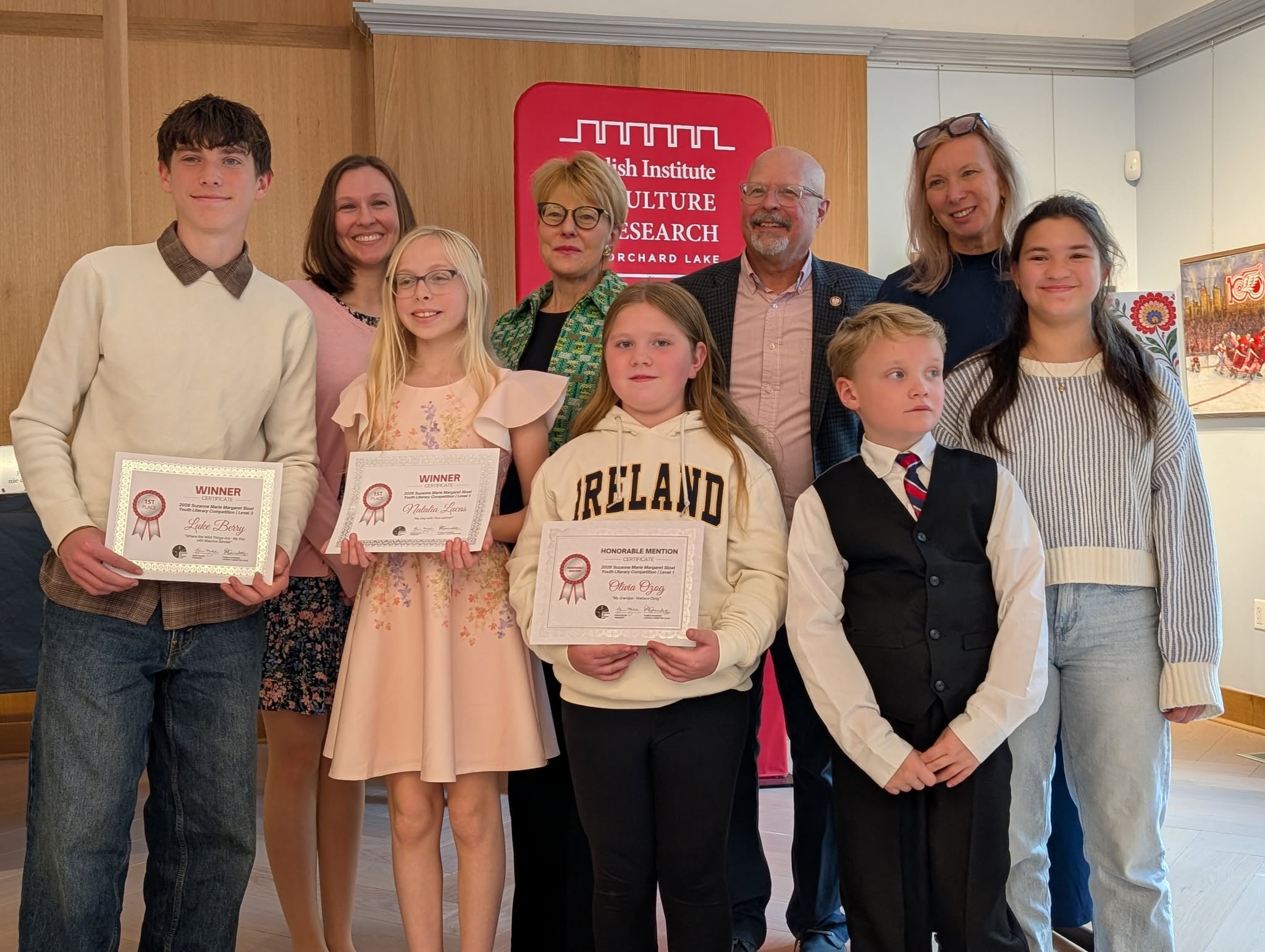
The Friends of Polish Art celebrated the winners of its 2026 Literary Competition at the Galeria on October 25. This year’s themes, “My Day with a Polish American Hero” for youth and “Historical Fiction about an Influential Polish American” for adults, attracted the largest number of entries since the competition resumed in 2024.
FPA President Brian Malski welcomed guests, followed by award presentations from Literary Competition Committee Chair Pam Saunders and Committee Member Jessica Saunders. Winners attending the ceremony also had the opportunity to read excerpts from their stories, making the celebration a wonderful showcase of creativity and Polish-American heritage.

We are pleased to present below three award-winning essays written by some of the young participants in this year’s competition. Selected by editor in chief for publication, these stories offer a glimpse into how young Polish Americans are engaging with the people, history, and heritage that have helped shape the Polish-American experience.
Wallace Ozog: My Grandpa
by Olivia Ozog
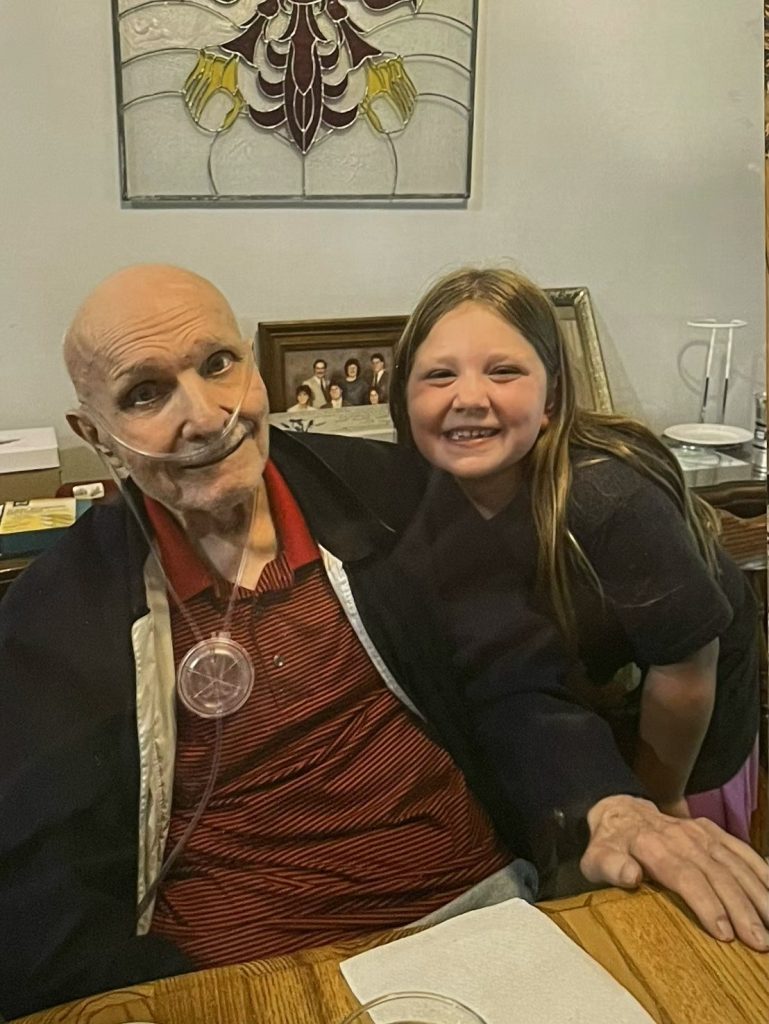
My day with an influential Polish American person centers around my grandpa, Wallace Ozog, who was the national President of the Polish Roman Catholic Union of America (P.R.C.U.A) for 12 years (1998-2010). My grandpa organized a great deal of events. He organized many youth events, earned many citizenship awards, and was a leader of the Polish community.
Youth Bowling was one of the events he organized. It’s not all about winning; it’s about having fun with friends and family. My grandpa made this event for the Polish people to get together. I always look forward to this event every year.
At Polish American Night at Comerica Park, all the Polish dancers show their dances to the people. My grandpa was a chairman of this event, and it was important to him to show off our Polish heritage. Polish American Night is fun and I’m glad that my grandpa was part of this whole thing.
As president of the Detroit Polish festival, my grandpa enjoyed eating his Polish food, looking at the vendors, and watching the Polish dancers. He loved spending time with everyone inside the big white tent listening to polka. He was proud to be Polish and to be president.
My grandpa worked so hard to bring the Polish community together. Passionate and fun, my grandpa was always taking care of us, playing cards with us, and teaching us about our Polish heritage. My grandpa meant a lot to us, and he was a great man and we will miss him.
My day with a famous Polish American hero Marcia Lewandowski
by Susan Walczak
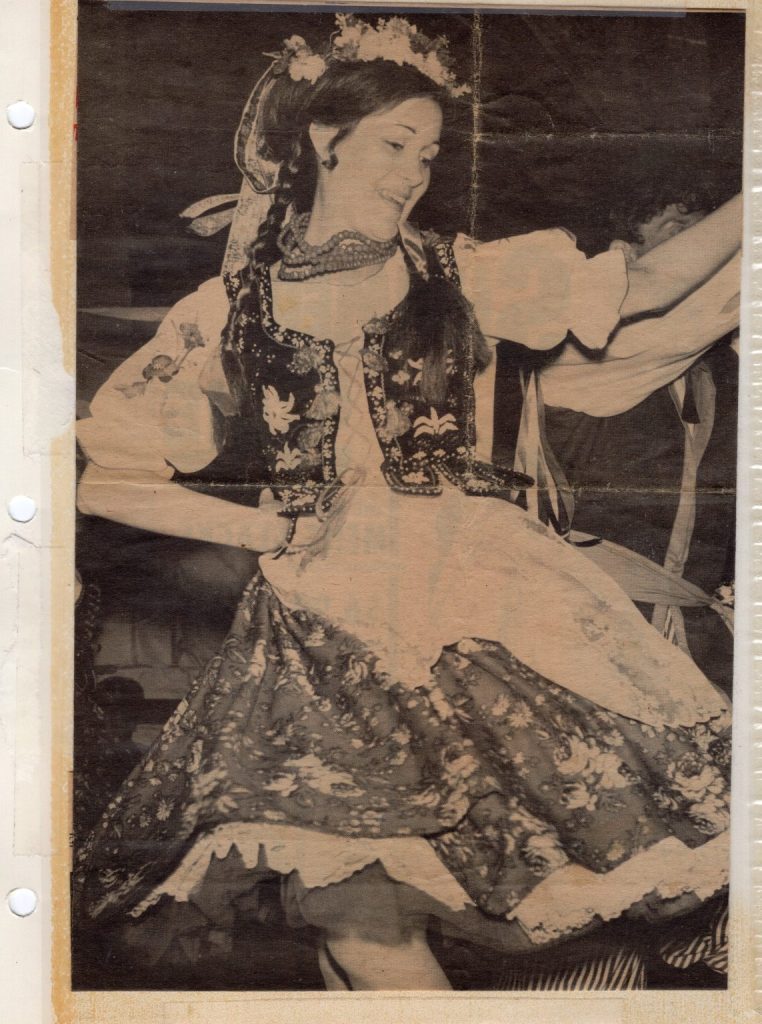
Finding a true hero for our heritage competition felt like searching for a single sparkly embroidered ribbon in a giant sea of history. I spent weeks looking for the right Polish American person, someone who loved folk culture just as much as I love to dance and follow our traditions. When I finally found Marcia Lewandowski, I thought I just picked a cool, inspiring community leader. But the absolute coolest thing happened when I told my mom about it—her jaw literally dropped open, she stared at me like I was crazy, and then a huge smile spread across her face as she yelled, “Wait… Mrs. Marcia? You’re writing about Mrs. Marcia?!”
It turns out that when my mom first moved to the United States from Poland and didn’t know what was going on in a totally new world, Mrs. Marcia was actually her Polish folkdance teacher with the Rzeszow Dancers! Hearing my mom tell stories about those days was so wild. She said dance practices weren’t just about learning steps, but were like a safe escape where she could hold onto her home country while everything else felt super confusing. She told me Mrs. Marcia was super talented, endlessly patient, and so kind, teaching everyone those fast, high-energy dances from southeastern Poland just to keep our culture alive for kids like her.
What makes Mrs. Marcia such a massive legend in the Polish American community is that she didn’t just teach dance—she dedicated her entire life to keeping our history alive. Aside from leading the Rzeszow Dancers for decades, she co-founded the famous Wawel Folk Ensemble, traveled all the way to Poland to master authentic choreography, and even sewed intricate traditional folk costumes and made gorgeous paper cutouts and pisanki eggs. She was a true perfectionist who cared deeply about every single detail of our culture, and she always wanted everyone to be super proud of where they came from.
What started out as a regular school competition project turned into this amazing, magical family moment. I realized Mrs. Marcia wasn’t just some random person in a history book—she actually helped my own mom feel at home in America! And now, I get to live that exact same feeling every single week. As a dancer with the Dunajec Dancers, I look forward to every single Monday with a massive smile on my face, totally excited to go to practice and feel the rhythm of our ancestors. Through every spin, every traditional song, and the best friends in our dance group, I am carrying on the exact same legacy that heroes like Mrs. Marcia started, proving that our heritage isn’t just old stuff in a book—it’s something we get to dance out and celebrate today!
Looking back, I am so glad it took me forever to find the right person for this project. If I hadn’t spent all those weeks searching, I never would have discovered how my mom’s story and my own story are connected through the magic of dance. Mrs. Marcia showed me that heroes don’t always wear capes—sometimes they wear traditional folk costumes, play lively music, and teach kids how to keep their hearts connected to home, no matter where they are in the world.
My Day with Casimir Pulaski
by Sofia Walczak
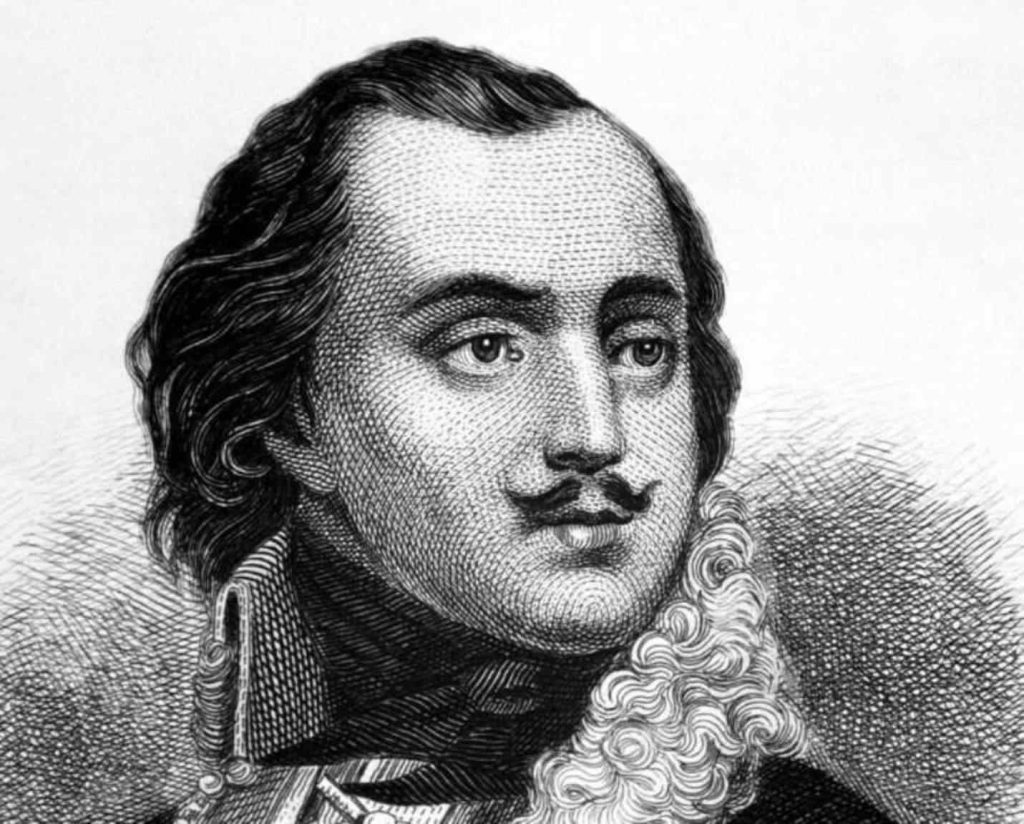
As the morning fog hung over the revolutionary war camp, General Pulaski tightened the saddle on his horse. General Pulaski is known as the Father of the American Cavalry. With a smile, he says, “come, today you will learn what courage really means.” I happily followed him on my own horse as he began to tell stories of how he became a true Polish American hero.
While we started our ride on the horses, I began asking Casimir Pulaski questions about why he came to America? Within the first hour, I began asking questions like, “do you miss Poland?” To which he began to tell me the stories of his past. He was born in Poland in 1745 into a noble family and as a young man became a skilled horseman and cavalry leader. During this time, Poland had been heavily influenced from Russia, so Casimir joined the other Polish patriots who had wanted Poland to go back to its roots and be free and independent. To try to fulfil their wish, he would fight in the Confederation of Bar, a rebellion against Russian control over Poland. After the rebellion failed due to an overwhelming military and backlash for others, Pulaski had to leave Poland, and he spent several years traveling through Europe. Over the several years he traveled Europe, he had lived in France where he met Benjamin Franklin. Franklin heard about Pulaski’s military experience, which made him write a letter of recommendation to George Washington about joining the American military. In 1777, Pulaski sailed to American because he believed in the colonists’ fight for freedom. Later, he wrote that he came to American to serve the cause of liberty and was willing to live or die for it. As Pulaski told me about his journey to America, he kept a smile on his face and ended his stories about the journey by saying that freedom was worth fighting for no matter where in the world you were.
After hearing about his journey from Poland to America, I followed General Pulaski to a field where dozens of soldiers had been training on horseback. I watched the horses race across the grass and how the soldiers practiced turning in formation and charging at others. Pulaski explained to me that cavalry soldiers had to trust both their horses and each other. I was invited to watch training up close, and it showed me how important discipline during a battle would be. The longer I watched the soldiers train, the clearer it was to me as to why Casimir was known as the Father of Cavalry. His confidence inspired those around him, and it made sense as to why George Washinton valued his leadership.
When training had ended, we had some free time, so I decided to ask Casimer some questions about courage and freedom. First, I asked if he had even been afraid during battle, to which he had answered honestly by saying he was afraid at times and every soldier feels fear, but the important thing is not letting fear stop you from what is important. Then, I asked him how he stays brave when things feel impossible. He told me he tried to focus on what he is fighting for because when you believe in something greater than yourself, it gives you strength. And finally, I asked him what advice he would give to young people today, to which he said, “work hard, be honest, and never be afraid to stand up for what you believe is right.”
While the daylight started to slowly disappear, it became time to say goodbye to Casimir Pulaski. Throughout my day, I learned valuable lessons such as courage and leadership. Hearing about Casimir’s life and the sacrifices he took for what he believed in became an inspiration. Spending a day with Casimir Pulaski would be an experience I would remember for the rest of my life.
Congratulations to all who were awarded!
Alicja