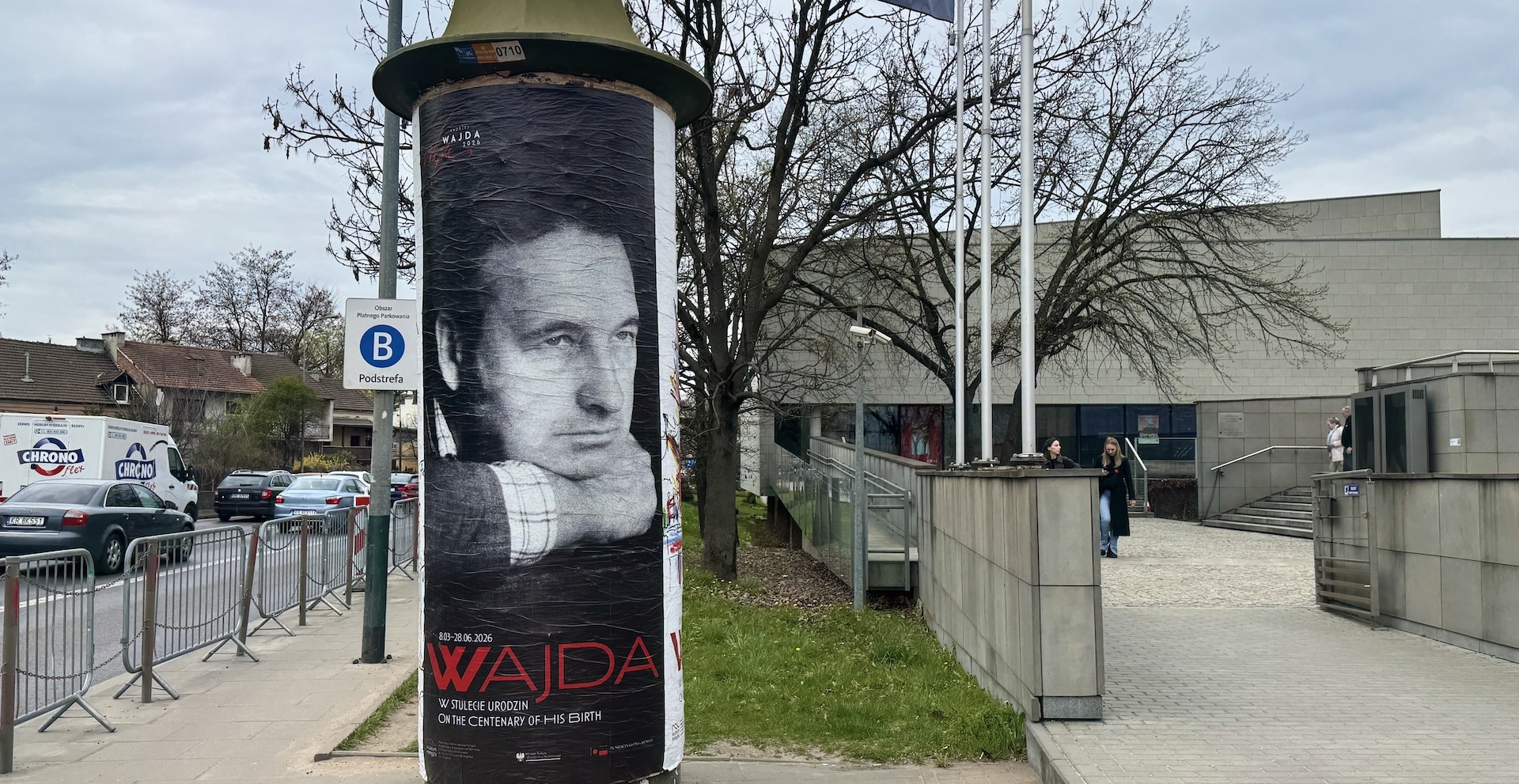
This year marks the 100th anniversary of Andrzej Wajda’s birth, and there are many exhibitions celebrating the life and accomplishments of this great filmmaker, theater director and teacher.
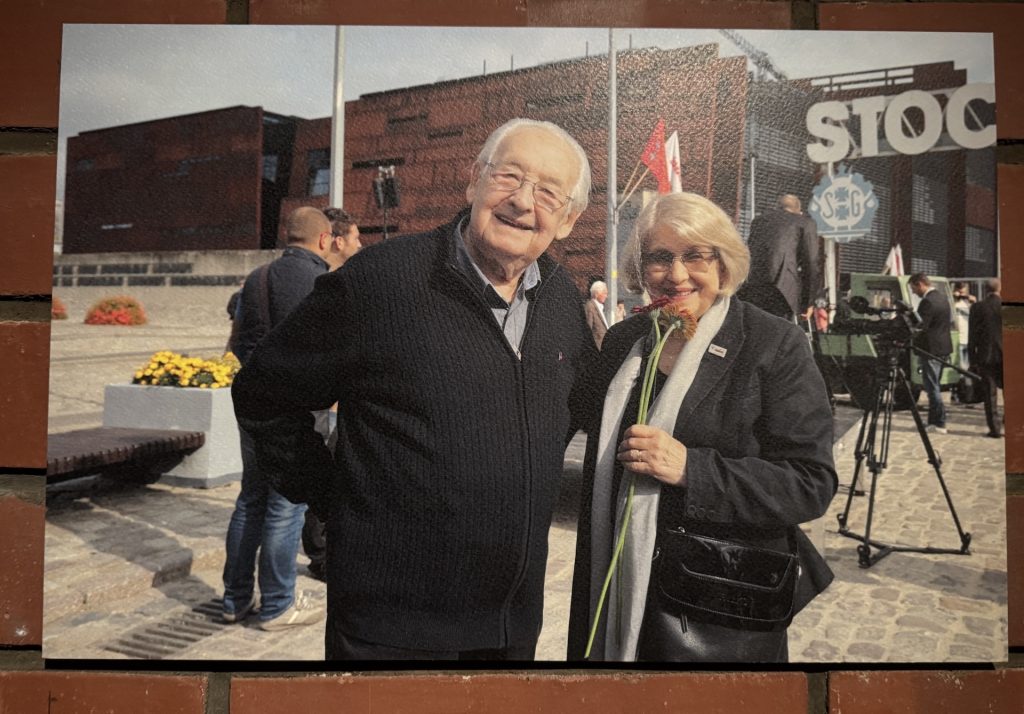
One of them is the exhibition “Wajda/ W stulecie urodzin/On the centenary of his birth” curated by his wife and artistic partner of many years, Krystyna Zachwatowicz. Born in 1930, Zachwatowicz, an award-winning set and costume designer, as well as an actress and Wajda’s fourth wife, was his life partner from 1974 until his death in 2016.
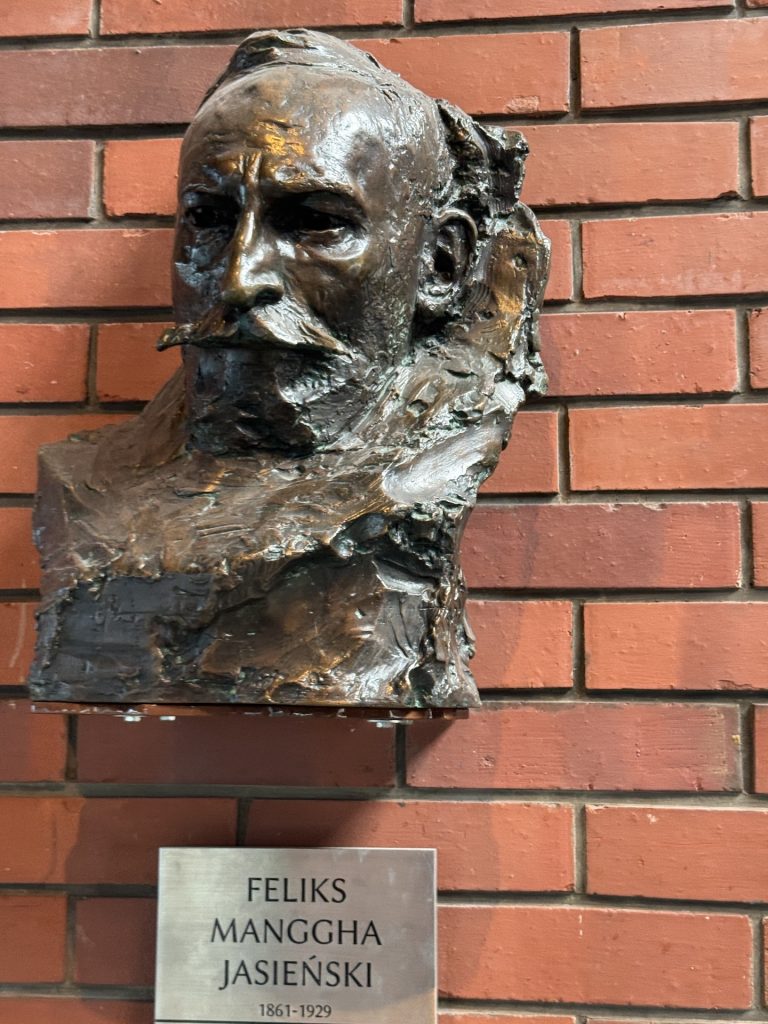
You might ask why such a personal show is being exhibited at Kraków’s Manggha Museum of Japanese Art and Technology. The answer, however, is rather simple and has to do with Wajda’s long-time deep fascination with Japanese art. As Wajda recalls, it started in 1944, when Kraków was still under the German occupation, and the eighteen-year-old Wajda had a chance to view the collection of Japanese art, amassed by Feliks” Manggha” Jasieński (1861-1929) and gifted by him to the National Museum of Kraków, where it was later stored. Wajda remembers it as the very first “real” art he saw, and Japanese masters such as Utagawa Hiroshige, Hokusai Katsushika and Tōshūsai Sharaku made such a big impression on him that later it became his dream to procure a place where this collection could be permanently displayed. In Wajda’s words: “Never before had I seen so much brightness, light, order and such a sense of harmony.”
Wajda travelled to Japan many times, and the Kraków show presents numerous sketches and miniatures painted by him during these trips. Interestingly, there are no photos taken by Wajda in Japan, only his own artwork inspired by the country and its art. One can infer that this shows the depth of Wajda’s fascination as well as knowledge of Japanese art.
For his achievements, in 1987 the filmmaker was awarded the prestigious Kioto Prize, a monetary portion of which (equivalent to around $345,000) he earmarked toward the new museum in Kraków. Over the years both he and his wife Krystyna were very involved with the museum (which opened in 1994) and with its expansion, which includes a tea house and the school of Japanese language.
Among many awards and recognitions Wajda received, the one he cherished the most was the “Brick” given to him by Polish journalists in 1977 for “Man of Marble”. The award was presented to Wajda in the staircase of the Gdańsk film festival venue, as the communist authorities did not allow it to be presented on the stage. In addition, many journalists who signed the proclamation which went with the award were fired from their jobs. This is just but one example of how troublesome the film was for the communist authorities.
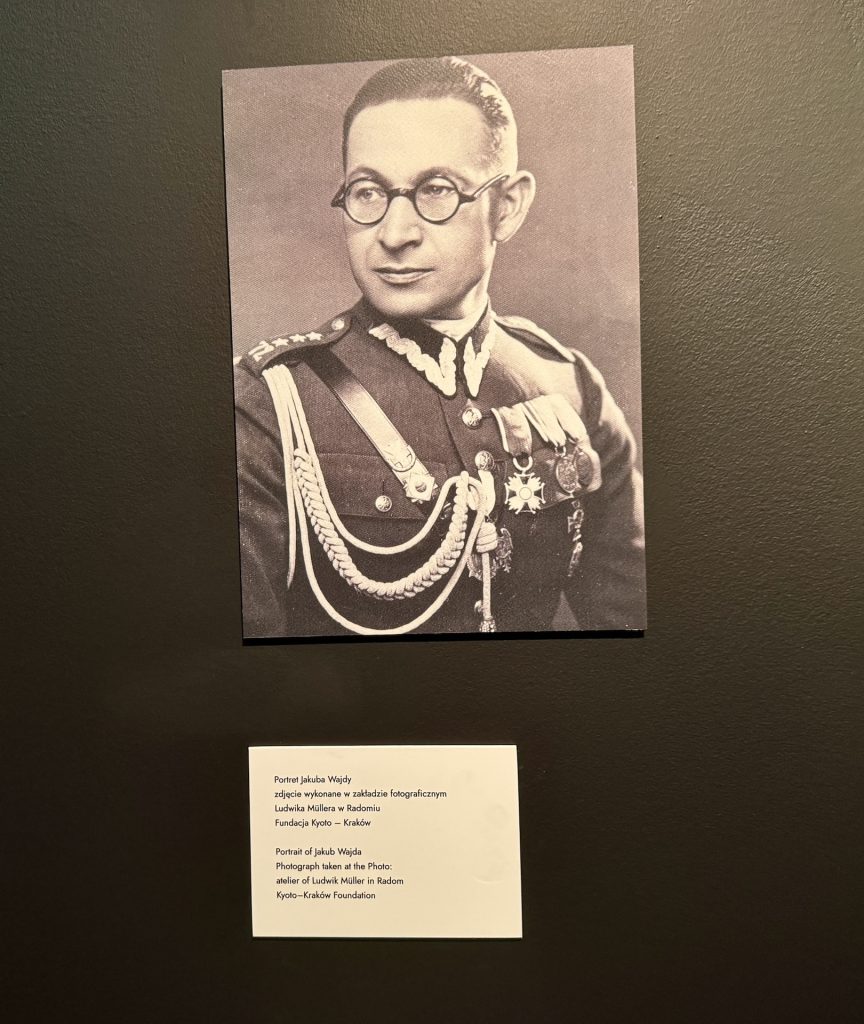
As mentioned before, “Wajda/ W stulecie urodzin/On the centenary of his birth” is a very personal exhibition. Among the artifacts shown are photos of Andrzej and Krystyna at their Żoliborz home, a place where not only people but also animals (dogs, cats and a magpie) were welcome. On March 12, 2007, Andrzej Wajda wrote: “In my old age I would like to be a cat in our house in Żoliborz. This is a refuge for those who fought; ears torn off, bitten, but they escaped with their lives and at the end need some warmth and safety… However, I still will wait a bit …”. There are also photos of young Andrzej, his brother Leszek, and their parents, Aniela and Jakub. Also displayed is his father’s saber. Jakub left this saber with the family before leaving for the September Campaign in 1939, during which he was captured and then like many Polish career officers killed in what is known as the Katyń massacre (he was kept in Starobilsk and killed in Kharkiv.) The Manghha exhibition is partially narrated with quotes from Wajda’s 2013 autobiography “Kino i reszta świata” (“Cinema and the rest of the world”) and with excerpts from his diaries. Among them, a quote about his mother who waited for her husband’s return from the war, even if she knew that most likely he was killed: “My mother died waiting for my father, although she knew he would not come back. This story requires a special form which conveys the mystery of waiting.” This “special form” came to Wajda when he decided to make the film “Katyń” as a tribute to both the men shot by the Soviet NKVD and to their families, especially to the women who first waited for them, and then for the truth about their demise, and finally, justice.
There are also very many storyboards drawn by Wajda for such films as “Ashes and Diamonds”, “Man of Marble”, “Man of Iron”, “Korczak”, “Katyń” and “Afterimage” (2016, the last film Wajda made): a real treat for film buffs. These, together with the sketches from Japan, remind us that Andrzej Wajda was a very promising art student in Kraków’s Academy of Fine Arts before he decided to pursue filmmaking in the Łodź Film School. The decision to switch was made, according to Wajda, when he befriended the painter Andrzej Wróblewski, and compared Wróblewski’s talent to his own.
Andrzej Wajda left behind a great many diary entries – as we read in the exhibition’s narrative, he never parted with his sketchbook – in which he commented on his ongoing work, as well as on political and cultural events, and noted ideas for future films. In addition, there is a very substantial number of interviews with the artist: all of it an invaluable resource which sheds light on Wajda’s artistic process as well as on the times when he created his art.
The Kraków exhibition runs until June 28.
Information about the show: