
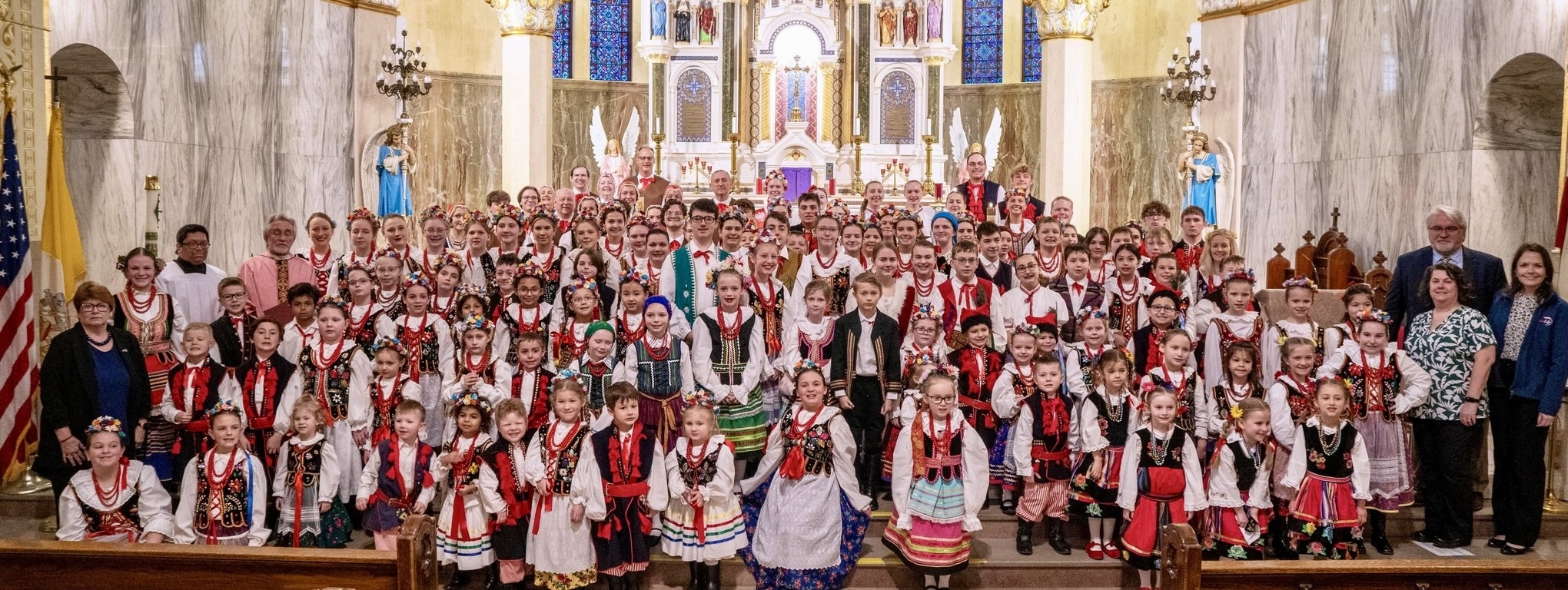
The 22rd Anniversary Blessing of the Polish American Dance Ensembles at the St. Hyacinth Church in Detroit. Photo by Marian Krzyżowski
In January of 2026 we sent out a short survey to our local Polish dance groups. All 15 groups answered the questionnaire. We are very grateful to the group directors and teachers for participating in the survey and sharing the information with us.
Some survey findings, numbers at a glance, and the overview are published at https://polishweekly.com/detroit-area-polish-folk-dance-groups-in-2026-an-overview/
The reports document the efforts of a well-organized, industrious, hard-working and passionate group of people which constitute the core of the dance groups. The groups are strong and endure due to “their institutional memory” which is a combined, passed-on knowledge of sometimes even four generations of dancers (and two or three generations of teachers). This “capital” provides continuity and the framework in which new instructors come up in the ranks. Many parents pitch in with organizing fundraisers, including raffles at the annual recitals which constitute the pinnacle of the groups’ yearly activities.
Below you will find the groups’ individual reports. Overall, at the end of 2025 we had 601 youth and adult dance students, taught by 15 dance teachers/choreographers, helped with assistants. The largest group was the P.R.C.U.A. Zajączek Dance Ensemble (99 students), followed by the Dunajec Polish Song &Dance Ensemble (79) and the PNA Centennial Dancers (60).
We invite you to read these very interesting and inspiring individual reports. They are presented in alphabetical order:
- PNA Centennial Dancers
- Dunajec Polish Song &Dance Ensemble
- P.R.C.U.A. Gwiazda Dancers
- P.R.C.U.A. Halka Dancers
- P.R.C.U.A. Malbork Dance Group
- P.R.C.U.A. Opole Dance Ensemble
- Polanie Song & Dance Ensemble (PNA)
- Polish Alliance Dancers (PNA)
- P.R.C.U.A. Polskie Maki Dancers
- P.R.C.U.A. Rogalin Dance Troupe
- P.R.C.U.A. Tatry Polish Dancers
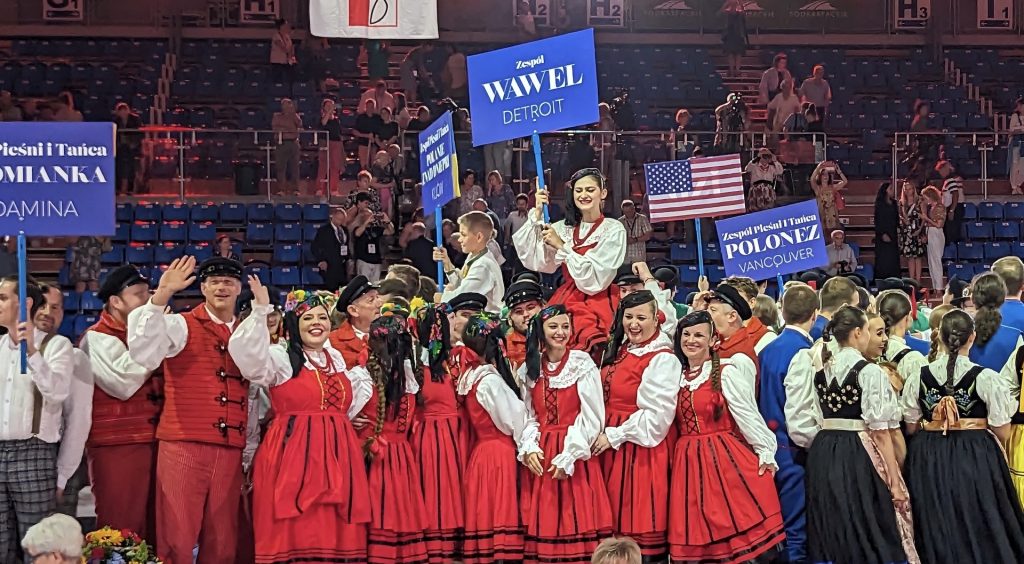
- Wawel Folk Ensemble
- P.R.C.U.A. Wieliczka Dancers
- P.R.C.U.A. Zajączek Dance Ensemble
- P.R.C.U.A. Zakopane Dance Ensemble
INDIVIDUAL REPORTS FROM EACH OF THE FIFTEEN DANCE GROUPS
1. The Polish Alliance Centennial Dancers
Contact: Natalie Jackson, njedruszko@gmail.com, Marie Stawasz, ms.stawasz@gmail.com
Website: https://pnacentennialdancers.wordpress.com/handbook/
1. When and by whom was your dance group established? The Polish National Alliance Centennial Dancers was founded in 1980, the Centennial Year of the Polish National Alliance (PNA), one of the largest and oldest Polish fraternal organizations in the United States. The PNA’s century of service and cultural preservation at the time of our founding continues to inspire our mission to celebrate, share, and preserve Polish dance and tradition today. Formed in 1980 by the Polish National Alliance (PNA) Lodge 53, formerly PNA Lodge 3240, the dance ensemble has been educating students, ages 3-18, and sharing Polish heritage and culture through music, dance and language for over three decades.
2. How many students did you have at the end of 2025? Who are your students? We had 60 students last year. Our students range in age from 3 to 18 (PK–12). We offer four dance classes along with a Polish language program for students in grades 1–8. Today, we are proud to have a nearly 50/50 blend of students from Polish-speaking and non-Polish-speaking households. Many of our dancers are second to fourth generation Polish Americans. This diversity has greatly enriched their exposure to and appreciation of Polish culture. We have made a dedicated effort to strengthen language fluency and deepen cultural connection among all of our dancers.
3. Where do you practice? We practice in the Livonia/Plymouth-Canton area.
4. Did the number of students increase, decrease or stay the same in the last two years? Over the past two years, our enrollment has remained steady, and more broadly, we have maintained a consistent size of approximately 60 students for the past 10 years. As graduating high school seniors leave to attend colleges and universities, they are continually replaced by younger siblings and new students joining the program. Many of our families actively recruit friends and extended family members, which has helped us build and sustain a strong network within the Polonia community across Wayne, Oakland, and Livingston counties.
5. How many instructors does your dance group employ? We employ two dancer teachers, Mrs. Natalia Jackson & Ms. Paulina Kowalczyk, both of whom graduated from choreography school in Rzeszow, Poland. We also have one language instructor, Mrs. Ania Doman.
6. Did the number of the instructors increase, decrease or stay the same in the last three years? We have consistently had two dance teachers and one language teacher for the last 15 years.
7. What do you consider your biggest achievements of the last two years? Over the past five years, we have made a focused effort to maintain our enrollment, strengthen our Polish language program, and enhance and refresh our costume collection. Each year, we add or refresh 3–4 new costumes, giving our dancers the opportunity not only to learn dances from a variety of regions, but also to authentically represent the richness and diversity of those cultures through traditional attire. Our costume coordinators (who are parent volunteers) research traditional folk attire in depth to make sure we are accurately representing different regions.
8. What do you consider your biggest challenges in the next two years? Securing a consistent practice location that accommodates both our group size and schedule has been a challenge. While we have worked with multiple partners for practice space rentals, finding a true “home base” for our program remains difficult. The nature of our group requires us to have space for both instruction and fraternization. We believe the success of our group stems from the many friendships formed between our Centennial families. It is difficult to find a rental space that can accommodate two simultaneous dance classes, a language class and a place for families to mingle.
9. What are the sources of funding for your activities? Are they sufficient? As a PNA dance group, our program is supported through funding from the Polish National Alliance and participation fees paid by families. In addition, we run an annual Polish Food Booth at the Plymouth Community Fall Festival, which serves as our primary fundraiser. This weekend-long effort plays a key role in supplementing our operating budget and helps ensure the continued success of our program.
10. Please share with us anything else you feel is important and what was not covered in this questionnaire. It would be wonderful to connect with other Polish Dance groups through a larger scale local festival or meetup. The children in our group truly make wonderful and lasting friendships through participation. It would be a great experience to see this in other area groups!
Submitted by: Marie Boyle
2. Dunajec Polish Song &Dance Ensemble, Sterling Heights
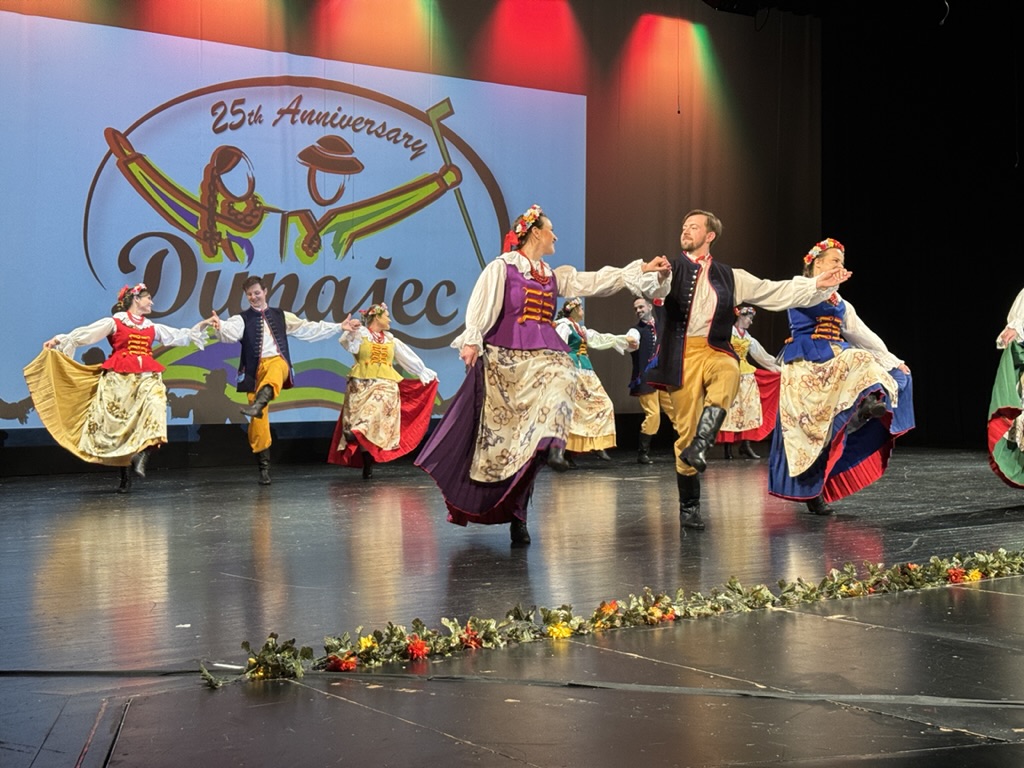 Contact: Tomasz Kielar, email: dunajec@hotmail.com; phone: 313-333-4469
Website: https://www.parisholc.org/wspolnoty-i-grupy-parafialne/zespol-piesni-i-tanca-dunajec/
FB: https://www.facebook.com/DunajecPolishSongDanceEnsemble/
1. When and by whom was your dance group established? “Dunajec” consists of six subgroups and is a parish group operating out of the Our Lady of Częstochowa Church in Sterling Heights. The subgroups are “Dunajec”, created in 1999 by Father Mirosław Frankowski, “Mały Dunajec”, established in 2000, “Teen Dunajec”, “Mireczki 1&2” (two age groups, established in 2003; the name honors Father Frankowski) and an adult female group “Kozice” (formerly: “Kozice i Capy”, established in 2013, 30-year-old, and older).
2. How many students did you have at the end of 2025? Who are your students? All together there are 80 students. They come from the Polish-speaking families. It is a part of Dunajec’s mission to foster the knowledge of the Polish language, so all of the instructions during group practice are in Polish.
3. Where do you practice? At Our Lady of Czestochowa Parish, Sterling Heights.
4. Did the number of students increase, decrease or stay the same in the last two years? The number of the students in the youngest groups increased significantly. However, it is difficult to say why. Perhaps the „Dunajec” anniversary celebration helped, or it was a post -covid effect. However, the adult group shrunk after the covid. Lack of new immigrants coming to the USA influenced this sharp decrease.
5. How many instructors does your dance group employ? One instructor and one assistant. The assistant, Zosia Zając, helps with the younger group of “Mireczki”.
6. Did the number of the instructors increase, decrease or stay the same in the last three years? Stayed the same.
7. What do you consider your biggest achievements of the last two years? Increasing the number of students.
8. How do you see the future of your dance group in the next two years? Promising!
9. What do you consider your biggest challenges in the next two years? Finding funds to buy new costumes. Costumes were always expensive; 10 years ago one costume for the Lachy Sądeckie cost $1,000 – but now due to tariffs costumes are extremally costly. It is also a challenge to find a place to store them.
10. What are the sources of funding for your activities? Are they sufficient? Dance class fees, fundraisers.
11. Please share with us anything else you feel is important and what was not covered in this questionnaire. Dancing in the group gives students an opportunity to show off their “Polish pride”; they are excited about it, as well as about the costumes and performing. They also form long-lasting friendships. The group is very fortunate to have wonderful and committed parents of the young dancers; it is very important for the group.
Submitted by Tomasz Kielar
3. P.R.C.U.A. Gwiazda Dancers, Hamtramck
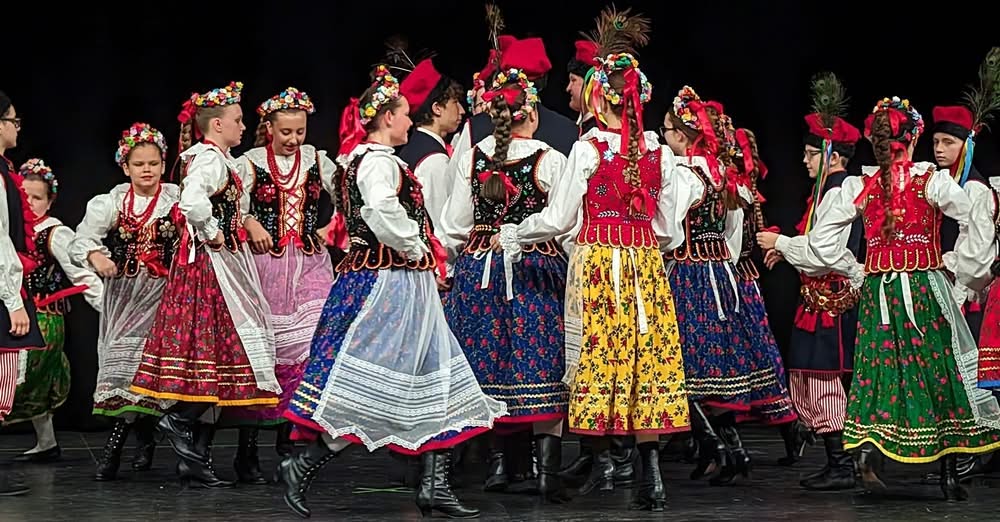 Contact: Jessica Urban (director), Basia Nowakowski (choreographer), panijessica33@outlook.com
FB: https://www.facebook.com/GwiazdaDancers/
1. When and by whom was your dance group established? “Gwiazda” was founded in 1960.
2. How many students did you have at the end of 2025? Who are your students?
We had 48 students at the end of 2025. They come from a variety of backgrounds from anywhere from 2nd generation Poles, to 4th generation. Over the years we have several ethnically mixed families as well! Many of our dancers (roughly 50%) that are first and second generation (and a few that are 3rd and 4th generation) come from Polish-speaking families.
3. Where do you practice? At the Hamtramck Community Center in Hamtramck, MI
4. Did the number of students increase, decrease or stay the same in the last two years? We have stayed about the same number of dancers over the past two years.
5. How many instructors does your school employ? We have one director and one choreographer.
6. Did the number of the instructors increase, decrease or stay the same in the last three years? The number of instructors has stayed the same.
7. What do you consider your biggest achievements of the last two years? In 2024, we traveled and performed in Macedonia for an International Festival.
8. How do you see the future of your dance group in the next two years? We see a bright future for our dance group, with a plan to travel to perform in Poland in 2027.
9. What do you consider your biggest challenges in the next two years? Costs of costumes, shipping, seamstress fees, practice facility and insurance policies are on the rise. In addition, we were just informed that the PRCUA subsidies to their dance schools have been cut in half beginning of January 2026. This will significantly increase the amount that our dance schools will need to fundraise to cover our costs and the costumes which we would like to acquire for our dance school.
10. What are the sources of funding for your activities? Are they sufficient? The answer in number 9 touched on this. Minimal funding comes from the PRCUA, however, the majority of our funding is from fundraisers and donations.
11. Please share with us anything else you feel is important and what was not covered in this questionnaire. In order to continue providing high-quality experiences for our dancers and ensuring the use of authentic, visually refined traditional costumes, additional funding and community sponsorship are essential. Gwiazda takes great pride in maintaining historically accurate costumes for each dance and in offering exceptional opportunities for our youth. Through these experiences, we strive to foster a lasting appreciation for Polish dance, create meaningful lifelong memories, and strengthen our dancers’ connection to their cultural identity as Polish Americans.
Submitted by Jessica Urban
4. P.R.C.U.A. Halka Dancers, Warren
Contact: Laura Hejza (director): lhejza@comcast.net; phone: (586) 291-4486
1. When and by whom was your dance group established? In 1969 by Alice Chylinski at Our Lady Queen of Heaven Church in Detroit, MI. The first recital was held in May 1970, and at the time we were called the PRCUA East Side Dance School. In 1978 we changed our name to the PRCUA Halka Dance School. “Halka” is the title of a Polish opera written by Stanisław Moniuszko in the 1800s and acclaimed as Poland’s “National Opera”. We are celebrating our 57th year as a dance school.
2. How many students did you have at the end of 2025? 32
3. Who are your students?Children from ages 2.5 thru high school, mainly from Polish American families. The parents of current students were involved with Halka in their youth and now have enrolled their children in the group.
4. Where do you practice?Currently at Renewal Church in Warren MI (prior to that we remained at Our Lady Queen of Heaven parish for over 50 years.)
5. Did the number of students increase, decrease or stay the same in the last two years?Number of students has decreased. In 2023 and 2024 we had 6 graduating students for each year which was a big hit to our total number of students. Our goal/hope is to each year gain as many as we graduate but that was difficult to reach when children are so involved in sports and other activities.
6. How many instructors does your dance group employ? We have only 1 teacher, Thomas Lisiecki, who is celebrating his 35th year with us.
7. What do you consider your biggest achievements of the last two years?Even though our school is smaller in size compared to others we continue to have a strong presence at events within Polonia. Also, that we enrolled 4 new dancers this year.
8. How do you see the future of your dance group in the next two years?We hope to continue our strong family bond.
9. What do you consider your biggest challenges in the next two years? Gaining more students.
10. What are the sources of funding for your activities? Are they sufficient?We are subsidized by the PRCUA (Polish Roman Catholic Union of America) but as times are changing they are now limited in the amount of support they can offer us which means we will need to rely on fundraising or increasing yearly dues charged to each family.
11. Please share with us anything else you feel is important and what was not covered in this questionnaire. We are proud of our longevity as a dance school—57 years. Our teacher is a 1985 Halka graduate and celebrating 35 years. I am a 1983 Halka graduate and have been the Director for 11 years succeeding my mother who held the position for 35 years. In 1987, Halka performed in the welcoming festivities for St John Paul II in Hamtramck. In 2018, Halka joined with the PRCUA Zajączek Dance Ensemble to perform in the 10th International Children’s Polish Folk Festival in Iwonicz-Zdroj, Poland.
Submitted by Laura Hejza
5. P.R.C.U.A. Malbork Dance Group, Grand Rapids
Contact: Natalia Szczygiel, malborkdancegroup@gmail.com
FB: https://www.facebook.com/MALBORKDANCEGROUP/
1. When and by whom was your dance group established? The Polish Roman Catholic Union of America Malbork Dance Group was founded in 2016 by Michelle Marcinowski and Dawn Rosinski.
2. How many students did you have at the end of 2025? Who are your students? We have 50 students of various backgrounds including 2nd and 3rd generation Polish Americans.
3. Where do you practice? Our Group practices at St. Isidore’s Benevolent Aide Society in Grand Rapids, MI.
4. Did the number of students increase, decrease or stay the same in the last two years? Our school size has grown by about 20% in the last two years. We attribute this to the joy our kids bring when performing at festivals and being present in Polish cultural events in West Michigan.
5. How many instructors does your dance group employ? We have one choreographer who started with the group, Michelle Marcinowski. We also have an assistant, the very first Malbork Dance Group graduate, Kelly Czyzyk.
6. Did the number of the instructors increase, decrease or stay the same in the last three years? No change in instructors as we have adequate number of smaller groups for our 50 students and one practice night each week.
7. What do you consider your biggest achievements of the last two years? Our largest success over the last two years is our school’s size as we are the largest we have ever been. We have also diversified our performance and engagement activities to spread more Polish folklore and culture cheer to West Michigan. We have performed/participated at the Grand Rapids Dożynki Harvest Festival, Pulaski Days Festival, Grand Rapids Gold Basketball Game, Grand Rapids Griffins hockey games, Traverse City Pit Spitters baseball game, St. Isidore the Laborer Catholic Church, local nursing homes, etc.
8. How do you see the future of your dance group in the next two years? I envision many smiling kids aged 3-18 years old loving to come to practice and perform with our Group. Our Group will continue to flourish with new members joining each year.
9. What do you consider your biggest challenges in the next two years? Largest challenge includes funding for the Group. We are a non-profit, fully volunteer-led team. Our fundraising and support comes from the Chicago-based Polish Roman Catholic Union of America supports the purchasing and sewing of authentic Polish costumes for our dancers.
10. What are the sources of funding for your activities? Are they sufficient? We would love more funding for costumes from Poland, however, make do with what we have. Costume prices have increased tremendously which makes procurement directly from Poland difficult.
11. Please share with us anything else you feel is important and what was not covered in this questionnaire. We love what we do. Our mission to instill a love for Polish cultural arts and heritage by teaching youth folk song and dance and showcasing these customs to our communities is in full effect!
Submitted by Natalia Szczygiel
6. P.R.C.U.A. Opole Dance Ensemble, Warren
Contact: Elizabeth Thacker, director: opole.director@comcast.net
FB: https://www.facebook.com/profile.php?id=100064547685143#
1. When and by whom was your dance group established? Established in 1958 and part of the PRCUA.
2. How many students did you have at the end of 2025? Who are your students?Approx. 40 students. Most are from Polish American families anywhere from 2nd – 4th generations.
3. Where do you practice?Kaltz Academy 21 Building in Warren, MI
4. Did the number of students increase, decrease or stay the same in the last two years? We have remained steady over the last several years. We have a lot of graduating seniors, so we’ll be looking to increase the number of new students.
5. How many instructors does your dance group employ?One (with one assistant). We also have a director (volunteer).
6. Did the number of the instructors increase, decrease or stay the same in the last three years? Stayed the same.
7. What do you consider your biggest achievements of the last two years?1-We performed at the Cheektowaga Polish American Arts Festival near Buffalo, NY. The trip included two performances as well as sightseeing. 2-We added a set of Przeworsk costumes to our collection. As part of the project, parents learned to bead and completed the beading of the girls’ vests.
8. How do you see the future of your dance group in the next two years?We are optimistic about our future. We will continue to pride ourselves on teaching authentic traditional dance and holding high standards for our costumes and performances.
9. What do you consider your biggest challenges in the next two years?Our biggest challenge will be to make necessary adjustments due to increased costs with less funding.
10. What are the sources of funding for your activities? Are they sufficient?Our major sources of funding are subsidies from the PRCUA, dance fees, and fundraisers. Unexpected subsidy cuts, in addition to rising costs, will require a shift to additional dance fees and/or more fundraisers in the future.
11. Please share with us anything else you feel is important and what was not covered in this questionnaire.The Opole Dance Ensemble’s main purpose is to teach traditional Polish folk dances. We strive for our dances and costumes to be as authentic as possible. We also include some novelty dances at our recitals. Beyond dancing, our students and parents become friends, and we love sharing the experience together.
Submitted by Elizabeth Thacker
7. Polanie Song & Dance Ensemble (PNA), Garden City
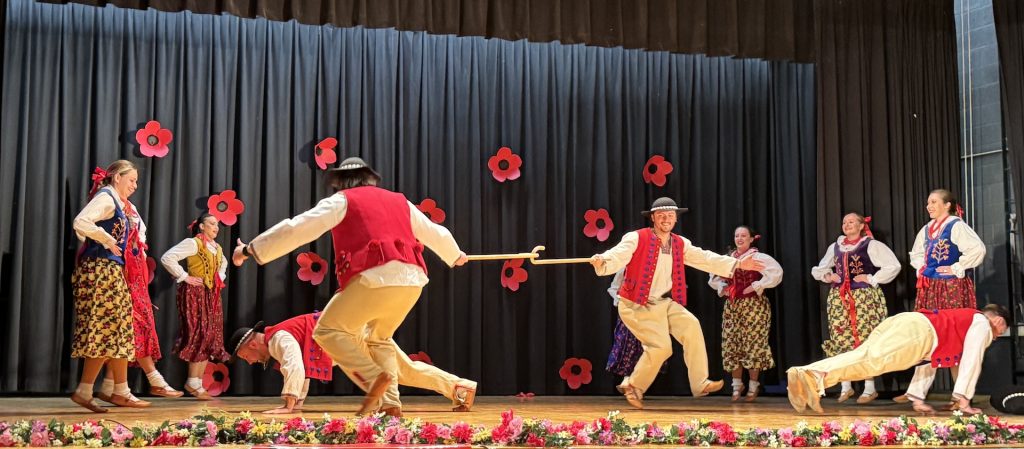 Contact: Natalia Jackson, polaniedetroit96@gmail.com
FB: https://www.facebook.com/polaniedetroit96/
1. When and by whom was your dance group established? Polanie Song & Dance Ensemble was founded by Christine Kryszko and Audra Cauchon, the group’s first director and choreographer, in 1996.
2. How many students did you have at the end of 2025? Who are your students? At the end of 2025 we had 14. Polanie has a mix of 1st generation and later as well as some dancers that were born in Poland. This year Polanie has 22 dancers as they prepare to participate in the World Festival of Polish Folk dancing in Rzeszow, Poland in July 2026.
3. Where do you practice?We currently all practice at St. Thomas the Apostle in Garden City on Saturday mornings.
4. Did the number of students increase, decrease or stay the same in the last two years? For Polanie, membership always increases the year before the Polish Folk festival as many alumni want to experience this joyous festival again.
5. How many instructors does your school employ?We have 2 dance teachers. Pani Paulina Kowalczyk is the co-choreographer with Pani Natalia Jackson.
6. Did the number of the instructors increase, decrease or stay the same in the last three years? Pani Paulina & Natalia were both students in PAD & GP and have continued to dance with Polanie as they came of age and have been teaching for over 15 years.
7. What do you consider your biggest achievements of the last two years? I would consider the members of the group our biggest achievement as they are all like family. POLANIE members not only see each other at practice, but during the week and events on the weekends. We have siblings, cousins & even a married couple.
8. How do you see the future of your dance group in the next two years? Many members of POLANIE will “take a break” for a year or two from the group until the next Festival in Poland takes place in 2029.
9. What do you consider your biggest challenges in the next two years?Growing the group. Saturday mornings are not ideal for many families, especially as their children get older and more involved with sports.
10. What are the sources of funding for your activities? Are they sufficient?Our main fundraiser is our pierogi fundraiser. We make pierogi twice a year, in the fall and during lent. It is an extreme amount of work, but with our dedicated families and recurring customers, this fundraiser will outlive all of us!
Submitted by Natalia Jackson
8. Polish Alliance Dancers (PNA), Garden City
 Contact: Natalia Jackson, polaniedetroit96@gmail.com
FB: https://www.facebook.com/polaniedetroit96/
1. When and by whom was your dance group established? Polish Alliance Dancers (PAD) and General Kazimierz Pulaski Language School (GP) were established in 1963.
2. How many students did you have at the end of 2025? Who are your students?At the end of 2025 we had 12 children in PAD & GP schools. Almost all children participate in both dance and language. Students in PAD & GP schools were all born in the US & are 1st or later generations. Some students speak Polish as they come from Polish-speaking families and others understand Polish as their Babcias & Dziadeks speak Polish to them.
3. Where do you practice?We currently all practice at St. Thomas the Apostle in Garden City on Saturday mornings.
4. Did the number of students increase, decrease or stay the same in the last two years? PAD & GP students have basically been the same families the past 2-5 years, and membership has increased as younger siblings become old enough to join the group.
5. How many instructors does your school employ?We have 4 teachers in total. Pani Ania Ligendza teaches language to our more advanced speaking students while Pani Veronika Gromek teaches language to our 2nd generation and later students. Pani Paulina Kowalczyk teaches all the PAD groups and is the co-choreographer with Pani Natalia Jackson for POLANIE.
6. Did the number of the instructors increase, decrease or stay the same in the last three years? Pani Paulina & Natalia were both students in PAD & GP and have continued to dance with POLANIE as they came of age and have been teaching for over 15 years.
7. What do you consider your biggest achievements of the last two years?I would consider the members of the group our biggest achievement as they are all like family. All the parents sit outside the classrooms while their child(ren) are in class and have become very close. Many of these members used to be members when they were younger as well!
8. How do you see the future of your dance group in the next two years?PAD & GP have been steady for many years now and the close bond of the families I believe will continue.
9. What do you consider your biggest challenges in the next two years?Growing the group. Saturday mornings are not ideal for many families, especially as their children get older and more involved with sports.
10. What are the sources of funding for your activities? Are they sufficient? Our main fundraiser is our pierogi fundraiser. We make pierogi twice a year, in the fall and during lent. It is an extreme amount of work, but with our dedicated families and recurring customers, this fundraiser will outlive all of us!
Submitted by Natalia Jackson
9. Polskie Maki Dancers (P.R.C.U.A.)
Contact: Maria Jalkiewicz, director: mariadancingqueen@yahoo.com
FB: https://www.facebook.com/groups/48541590951/
1. When and by whom was your dance group established? In 1975, with the approval of PRCUA National State Director, Charlotte Matkowska. The name was chosen by Polskie Maki’s first director, Maryann Adamkiewicz and group’s first dance instructor, Marsha Klik. The group was Hamtramck-based until 2009.
2. How many students did you have at the end of 2025? Who are your students? 26 students, many of them second or third generation. Also: children and grandchildren of former Polskie Maki dancers.
3. Where do you practice? In Warren.
4. Did the number of students increase, decrease or stay the same in the last two years? It decreased, as several students graduated. Also, a few left the group during covid.
5. How many instructors does your dance group employ? One choreographer, Kelly Galanty Malinowski, and one director Maria Jalkiewicz.
6. Did the number of the instructors increase, decrease or stay the same in the last three years? Stayed the same.
7. What do you consider your biggest achievements of the last two years? Our annual recital: we are very glad that we can come on the stage and perform every year. This is what our goal is every year. We try to keep the kids engaged and happy, because there is so much competition out there, especially with sports. So much demand on their time. Our school is on Saturday, and it is really a double-edged sword as the sports programs are also on Saturday. So, there is a direct competition.
8. How do you see the future of your dance group in the next two years? It is a little scary, but this year we gained four new students, and that what we need, young dancers who would stay with the group for a longer time.
9. What do you consider your biggest challenges in the next two years? Lower enrollments and funding.
10. What are the sources of funding for your activities? Are they sufficient? The fees parents pay, the P.R.C.U.A. subsidies and the fundraisers. It will be more of a challenge now, as if the size of the group goes down, some expenses do not change and we try to provide the same experience to our students.
Kelly (Galanty) Malinowski was interviewed for this report.
10. P.R.C.U.A. Rogalin Dance Troupe, Wyandotte
 Contact: Lisa Brandt, director, rogalindancetroupe@gmail.com, phone: (734) 775-7987
Website: https://rogalindancetroupe.weebly.com/
1. When and by whom was your dance group established? Rogalin Dance Troupe was established in 1969 by members of PRCUA Society #162 in Wyandotte, Michigan. Our group was originally called PRCU Wyandotte Dancers.
2. How many students did you have at the end of 2025? Who are your students? At the end of 2025 our enrollment was 56 students ages 3 – 18. We have a diverse mix of English-speaking students most with Polish ancestry. Many of our students are 2nd and 3rd generation Rogalin dancers.
3. Where do you practice? We practice on Tuesday evenings September – April at PRCUA Society #162 Hall (dance studio) 1430 Oak Street, Wyandotte, MI.
4. Did the number of students increase, decrease or stay the same in the last two years? Our student count has stayed consistent.
5. How many instructors does your dance group employ? We currently have 2 teachers/choreographers.
6. Did the number of the instructors increase, decrease or stay the same in the last three years? We have had 2 instructors since 2021.
7. What do you consider your biggest achievements of the last two years? I am proud that our group continues to remain relatively large and well known in the downriver area.
8. How do you see the future of your dance group in the next two years? I am hopeful that our group will continue to maintain and grow.
9. What do you consider your biggest challenges in the next two years? I am concerned with some changes that PRCUA Home Office is making to required level of PRCUA Life insurance for our dancers and the decrease of our monthly subsidy for our students.
10. What are the sources of funding for your activities? Are they sufficient? We receive a monthly subsidy from PRCUA for each dancer. We have a yearly tuition fee for dancers and we do fundraising.
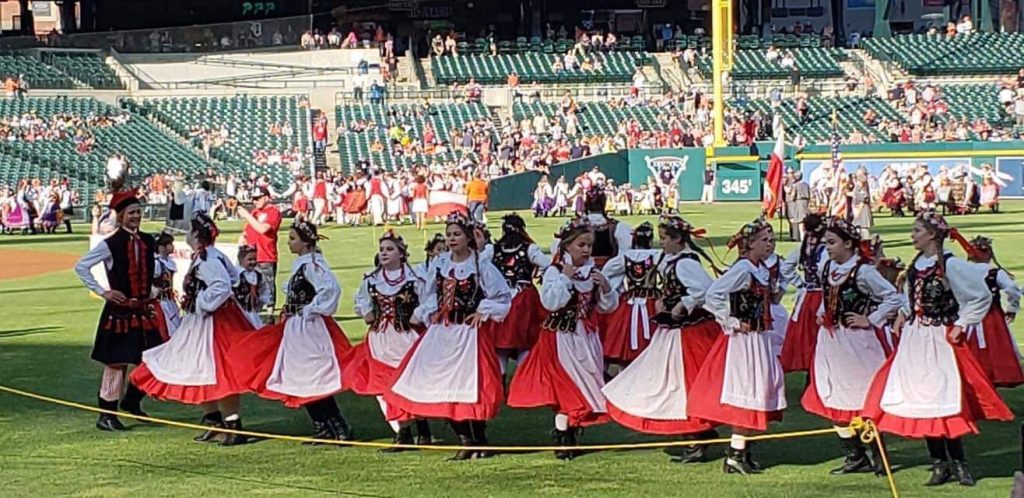
11. Please share with us anything else you feel is important and what was not covered in this questionnaire. Known as the PRCU Wyandotte Dancers for years, Rogalin Dance Troupe was selected asthe group’s new official name in 1997. A contest was held for any dancer to name the group. Robert Vilag submitted the name Rogalin, which is a village in Poland located on a river that has the largest strand of oak trees in the country. The dance studio is located on Oak Street in Wyandotte. While names and faces have changed over the years, the pride in our Polish heritage has remained our primary focus. We have become known for our quality performances at festivals, luncheons, dinners, parades, civic and church programs. Dancing at the Detroit Tigers’ annual Polish American Night, first at Tiger Stadium and now at Comerica Park, has been a tradition since the early years. Through it all, memories and wonderful experiences have been the result. The instructors,directors and parents have supported and offered the guidance necessary for our youth to develop pride and love for their culture and heritage. Many of our former dancers are now proud parents of current dancers and understand the importance and value of instilling our heritage in their children and have joined us to perform this afternoon. The pride of ourheritage has and will continue to grow through the years to come
Submitted by Lisa Brandt
11. P.R.C.U.A. Tatry Polish Dancers, Dearborn
Contact: Gail Esker, Mary Skurnit, tatrydancers@gmail.com
FB: https://www.facebook.com/groups/TatryDancers/
1. When and by whom was your dance group established? In 1970, at St. John the Baptist.
2. How many students did you have at the end of 2025? Who are your students? Around 20. Most are the second generation. We have 1 family that’s Polish speaking, and first generation.
3. Where do you practice? At the Cherry Hill Presbyterian Church in Dearborn.
4. Did the number of students increase, decrease or stay the same in the last two years? It’s been a downward hill, but we have some new young ones. Reasons: 1) kids are more involved in other activities, 2) demographic is changing in the Dearborn area, 3) possibly costs, although we try to keep it as low as possible.
5. How many instructors does your dance group employ?One plus a helper.
6. Did the number of the instructors increase, decrease or stay the same in the last three years? Stayed the same.
7. What do you consider your biggest achievements of the last two years? Getting some new students.
8. How do you see the future of your dance group in the next two years? Right now, it’s tentative. We are having issues with getting kids, and more so, having parents get involved in more ways other than dropping off the kids.
9. What do you consider your biggest challenges in the next two years? Enrollment and costs. Our rent went from $200/month (constant no matter how many practices) to $400 to $1000/month (variable).
10. What are the sources of funding for your activities? Are they sufficient? PRCUA funds, fundraisers, tuition.
11. Please share with us anything else you feel is important and what was not covered in this questionnaire. It’s been a struggle these last 5 years. Parent involvement is like pulling teeth. Money is non-existent. Still haven’t paid our instructor this year due to diminishing funds. Hopeful with the new little ones coming in from Tatry Alumni parents. And we are such a small group, and parents won’t bring their kids to summer performances, that any money-making performances we can do, we have to turn down.
Submitted by Mary Skurnit
12. Wawel Folk Ensemble, Warren
 Contact: Donna & Tom Skurski: 1965wawel@gmail.com
FB: https://www.facebook.com/groups/wawelfolkensemble/
1. When and by whom was your dance group established? The group was established by Marcia Lewandowski, Richard Kubinski and Pan Habrowski in 1965. The group chose the name Wawel Folk Ensemble, Wawel after the castle in Krakow where the Kings of Poland once lived.
2. How many students did you have at the end of 2025? Who are your students? At the end of 2025, Wawel had 25 students ranging from college and up. Wawel mostly has 1st & 2nd generation Polish Americans. However, a few of our members still speak fluent Polish at home.
3. Where do you practice? Wawel currently practices on Wednesday, in the Hoover/11 mile area in Warren, MI.
4. Did the number of students increase, decrease or stay the same in the last two years? Actually, I am happy to say, that our group has actually increased in the number of students we currently have. The group traveled to Poland in 2023. When they returned, they were very excited which caused a lot of excitement with their siblings, who at the time were still in a children’s group. Now that they have graduated from high school they became eligible to dance in Wawel, along with some dancers of other children’s groups.
5. How many instructors does your dance group employ? Wawel has only one instructor Mrs. Donna Skurski, who has a BFA in Dance Theatre. I as well as my husband have traveled to Poland to study at the Choreographer’s Course in Lublin, Poland. They studied under the dance masters, learning about the customs, costumes, national and regional dances, and songs of each region. Donna brings with her over 50 years of dance and teaching experience with her. Donna has been the Artistic Director of Wawel since January 1992, along with her husband Tom who is the managing Director.
6. Did the number of the instructors increase, decrease or stay the same in the last three years? As mentioned in question #4, Donna has been the only Dance Instructor of Wawel since January,1992.
7. What do you consider your biggest achievements of the last two years? Wawel’s biggest achievement in the last 2 years, was preparing for our 60th Anniversary Concert in December 2025. All the dancers put forth their best efforts in making it a success. In addition to having to learn a new suite, Nowy Sącz, for the concert, which they performed flawlessly.
8. How do you see the future of your dance group in the next two years? This year the group is preparing to travel to Rzeszow, Poland to participate in the World Folk Dance Festival. I know returning will bring more excitement and energy to the group and dancers. We do expect to expand the group, with many dancers graduating from high school and from the children’s group. However, I hope to keep the group at a manageable size, because of costuming.
9. What do you consider your biggest challenges in the next two years? The biggest challenges for me as a choreographer are probably have the group get too large. It’s nice to have a large group, don’t get me wrong, but some performance venues don’t have a stage large enough for everyone to perform. That is nice in a way, to have a break between dances but not for those dancers to only perform one or two dances. Another challenge is costumes, not having enough for each dancer or the correct size.
10. What are the sources of funding for your activities? Are they sufficient? The Wawel Folk Ensemble has always been a self-sustaining adult dance group. We rely mainly on performing and fundraising events. This past January, Wawel sponsored their first Corn Hole Fundraiser, which may be our annual January fundraiser. In 2023, Wawel was awarded the Donald Samull Grant from the Friends of Polish Art, which immensely helped our group purchase additional costume, when the group traveled to Poland for the Folk Festival in Rzeszow. We also received the same award in 2025, which helped us financially with our 60th Anniversary Dinner Dance in November and our Gala Dance Concert at Warren Woods Middle School this past in December.
Submitted by Donna Skurski
13. P.R.C.U.A. Wieliczka Dancers, Dearborn Heights
Contact: Kristi Mihalic, wieliczkadance@gmail.com
1. When and by whom was your dance group established? We were established in the fall of 1955 by Maria Siwula, Joseph A Drobot and Shirley Hojnacki Galanty.
2. How many students did you have at the end of 2025? Who are your students? At the end of 2025 we had 12 students. Breanna Kinsey, Ian Zelek, Lillia Zelek, Vanessa Kinsey, Celia Mercado, Olivia Drane-Kosakiewicz, Olivia Burden, Anastasia Kilijanczyk, Madison Smith, Rosie Mercado, Stella Kinsey, Rebecca Kinsey. They do not come from Polish speaking families and most of the students are from mixed ethnicity families; fourth or fifth generation Polish Americans.
3. Where do you practice? We practice at the Polish Legion of American Veterans (PLAV) Post 16, 25222 W. Warren Rd. in Dearborn Heights, Michigan.
4. Did the number of students increase, decrease or stay the same in the last two years? The number of students has decreased. The children seem to either lose interest or become involved in other interests like sports that take up all their time.
5. How many instructors does your dance group employ? We employ one instructor.
6. Did the number of instructors increase, decrease or stay the same in the last three years? The number of instructors has decreased. With our enrollment dropping every year, we simply can’t afford to pay for more than one instructor.
7. What do you consider your biggest achievements of the last two years? We will be celebrating our 70th year as a dance school this year.
8. How do you see the future of your dance group in the next two years? Unfortunately, we will either cease to exist, or we will merge with another dance school that is also suffering from low enrollment numbers.
9. What do you consider your biggest challenge in the next two years? Our biggest challenge will be getting new students to join the dance school.
10. What are the sources of funding for your activities? Are they sufficient? We rely on fundraisers and donations to keep the school going. If all the dancers are members in good standing, we are eligible for a subsidy from the PRCUA Home Office. No, they are usually not sufficient.
11. Please share with us anything else you feel is important and what was not covered in this questionnaire. We are a small but mighty dance group. The children take much pride in sharing their Polish heritage and love to share stories with each other of the traditions their families still take part in especially during the holidays. We are lucky to have some of our children’s children dancing with us now. We are thankful for the foresight of our founders as it was a start of something great for the Polish American children in the metro Detroit area.
Submitted by Kristi Mihalic
14. P.R.C.U.A. Zajączek Dance Ensemble, Sterling Heights
Contact: director, Colleen Bonkowski, zajaczekdance@yahoo.com
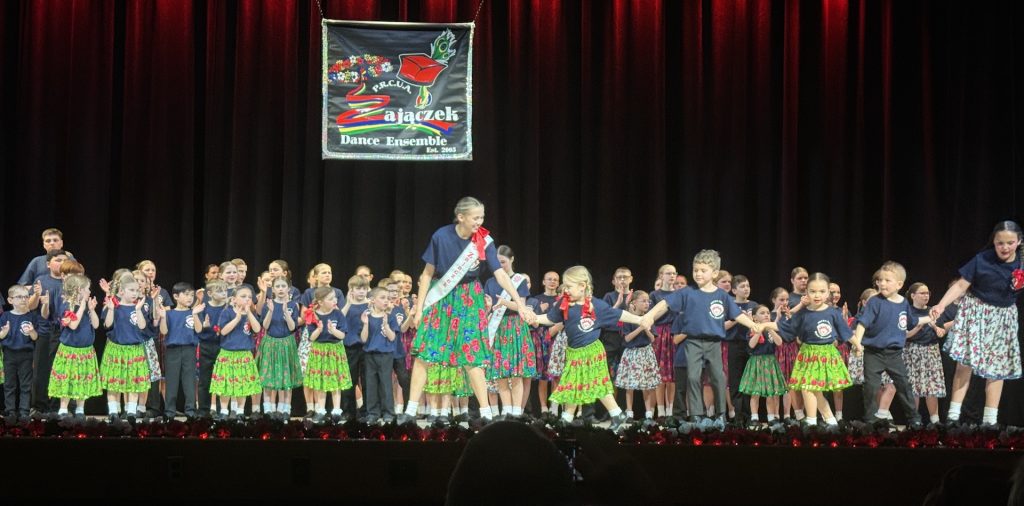
1. When and by whom was your dance group established?PRCUA Zajączek Dance Ensemble was established September 2005. Colleen Bonkowski, Director with Choreographers, Ms. Rachael Kasperek and Mrs. Tricia Zajac Dennis.
2. How many students did you have at the end of 2025? Who are your students? PRCUA Zajączek Dance has 99 students at the end of 2025. Most students at Polish American are native-born, but we also have a few fluent speakers from second and third generations. We are blessed to be multi diverse with students of parents from Poland, Honduras, Philippines, and China.
3. Where do you practice?PRCUA Zajączek Dance practices at the American Polish Century Club, 33204 Maple Lane, Sterling Heights on Thursday Nights from 5:45-10:00pm
4. Did the number of students increase, decrease, or stay the same in the last two years? We are lucky that our school has maintained high student enrollment. Some students left Polish dance due to school, dance studio, or sports activities scheduled on the same night.
5. How many instructors does your dance group employ? Our dance school has three choreographers that have taken classes to improve their teaching skills through the past years.
6. Did the number of instructors increase, decrease, or stay the same in the last three years? PRCUA Zajaczek started with two choreographers and in the past two years have taken on another teacher to help with the size of the school.
7. What do you consider your biggest achievements of the last two years? The biggest achievement was celebrating our 20th Anniversary at our annual recital March 2025.
8. How do you see the future of your dance group in the next two years?Our dance school will stay strong because the families love their heritage. The students are learning Polish culture through the art of national dances of Poland with what the costumes were worn in that region, teaching traditions, American Polkas. Our school recognizes the Catholic religion by going to Polish masses in costume, honoring sacraments, and pray before our function meals and at our annual recital before program begins as a whole family. We also instill family values like respect and helping others in need.
9. What do you consider your biggest challenges in the next two years? Our biggest challenge is the economy and the cost of everything to run a dance school. We have rent of practice facility, rent of storage unit to hold our costumes, insurance on the school, increase of costume costs from Poland plus duty taxes, materials to make costumes here, the cost of putting a recital on, etc.
10. What are the sources of funding for your activities? Are they sufficient?Our school does fundraisers throughout the year, especially our largest one in February. Since we belong to the Polish Roman Catholic Union of American, our fraternal organization, we get a small subsidy from them. Is this sufficient? It will get us through our dance year.
11. Please share with us anything else you feel is important and what was not covered in this questionnaire. As long as everyone with Polish heritage stays strong with their culture, we will keep on teaching the youth the art of dance for years to come.
Submitted by Colleen Bonkowski
15. P.R.C.U.A. Zakopane Dance Ensemble, Warren
 Contact: Colleen Bonkowski, director
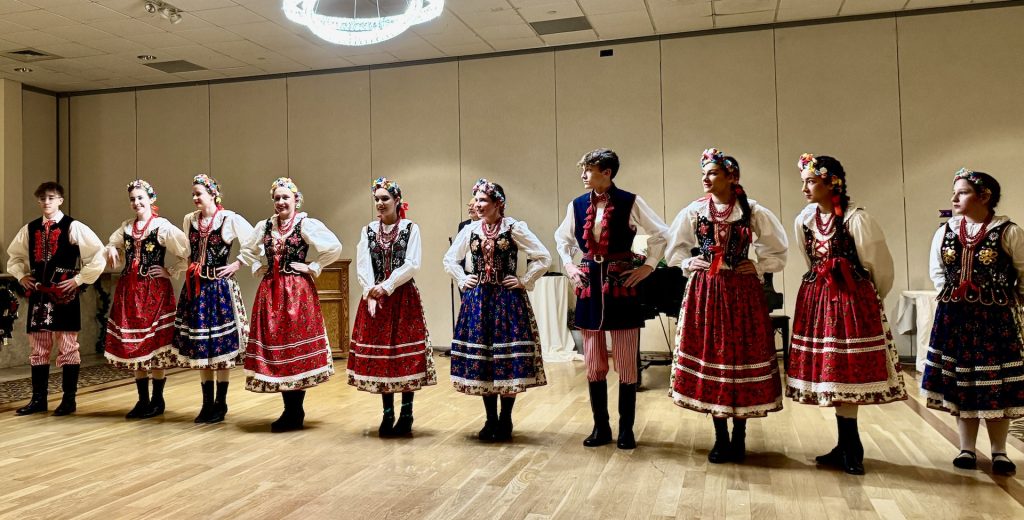
1. When and by whom was your dance group established?PRCUA Zakopane Polish Folk Dance Ensemble October 2008 with Thomas Lisiecki and Colleen Bonkowski.
2. How many students did you have at the end of 2025? Who are your students? PRCUA Zakopane has 28 adult dancers. All are Polish American born.
3. Where do you practice?Renewal Church, Warren.
4. Did the number of students increase, decrease, or stay the same in the last two years? PRCUA Zakopane dancers have stayed the same. We are adult group, so jobs and family life have affected the group size.
5. How many instructors does your dance group employ? The group has one choreographer.
6. Did the number of instructors increase, decrease, or stay the same in the last three years? Stayed the same.
7. What do you consider your biggest achievements of the last two years? Doing performances especially for Polishfest in Milwaukee, APPC Polish Fest, senior citizen facilities, church festivals.
8. How do you see the future of your dance group in the next two years? As long as we have dancers, we will keep performing.
9. What do you consider your biggest challenges in the next two years?The economy and cost of everything involving running a dance school.
10.What are the sources of funding for your activities? Are they sufficient? Fundraising, donations from performing, subsidy from our fraternal organization, Polish Roman Catholic Union of America.
Submitted by Colleen Bonkowski





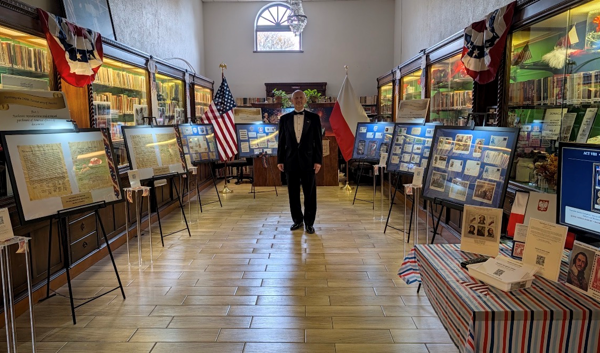




Looking for adult dance classes. John Blacha