After Easter Monday, follows Easter Tuesday, the third day of Easter, which in Poland was officially celebrated until 1924. It is not a state holiday anymore but is usually a day off from school for children and university students who hence have time to participate in festivities occurring on that day.
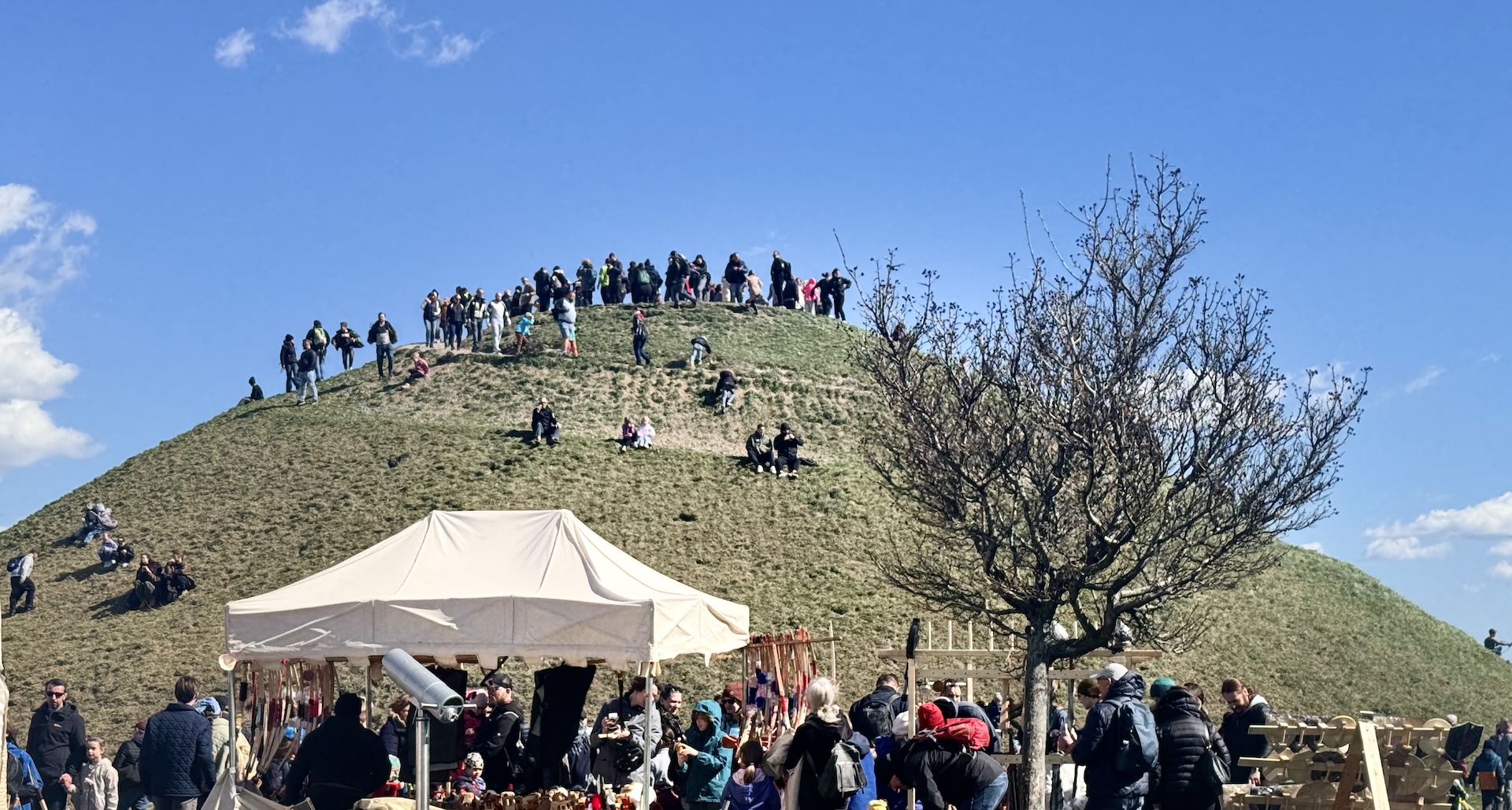
In Kraków, the place to be on Easter Tuesday is one of Kraków’s four mounds, the Krakus (or “Krak”) Mound. Both the mound and the festival held there are called “Rękawka”. According to an old tale (discredited by cultural archeologists) the mound was built by people bringing dirt in their sleeves (“rękaw” in Polish means a “sleeve”) to commemorate the legendary king Krak after his death. When exactly the mound was built, nobody knows.
From the early Middle Ages there were spring festivities held there, which for the Slavs were connected with the veneration of dead ancestors. Archeological digs performed in the 1930s revealed the wooden structure of the mound and old coins and other artifacts going back to the 8th-10th centuries.
To offset the pre-Christian beliefs and practices, the small Catholic church of St. Benedict was built nearby in the 11th Century. The church held an annual fair on the feast of St. Benedict (March 21) offering attractions such as wooden toys, sweets, and later on – still popular in the second half of the 20th century – carnival rides. The presence of the church, however, did not extinguish the earlier practices. To show their veneration of the dead, for centuries, well-off Kraków burghers would come to the Krakus Mound on Easter Tuesday to throw or roll coins, apples, eggs, buns and other food items (leftovers from the Easter meal) down the mound to the local poor. A stop was put to this practice by the Austrians in 1897, nevertheless, the custom of throwing food and balloons from the mound was still recorded as late as 1939.
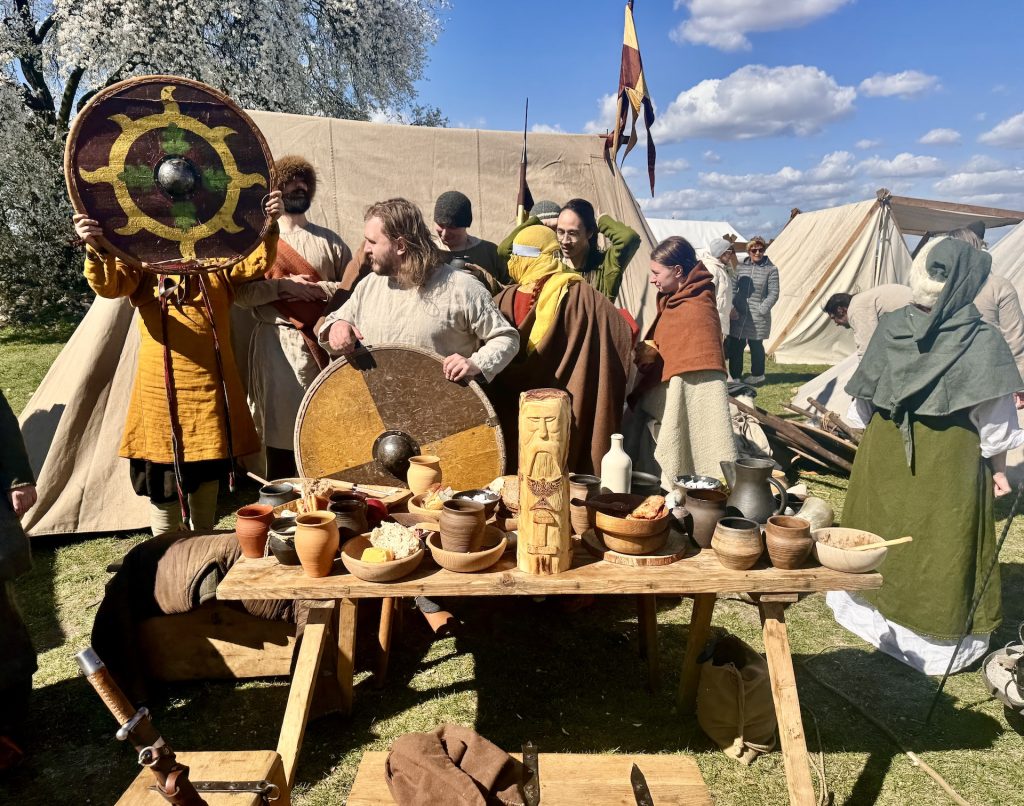
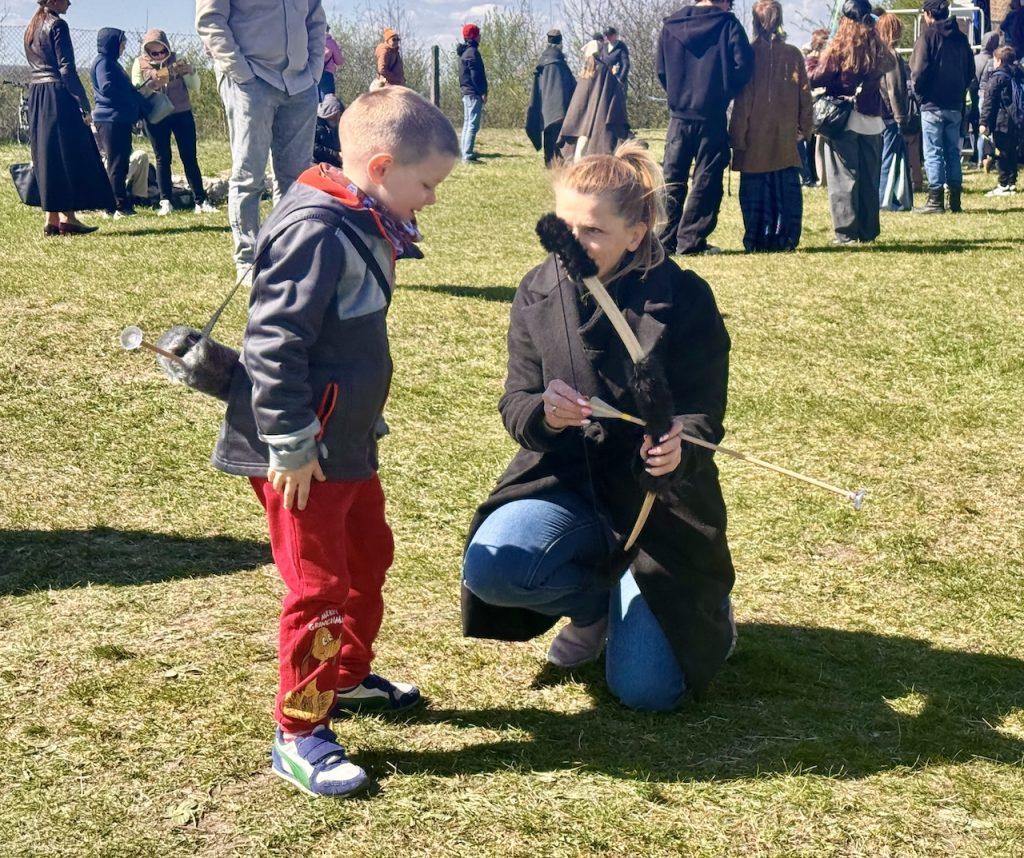
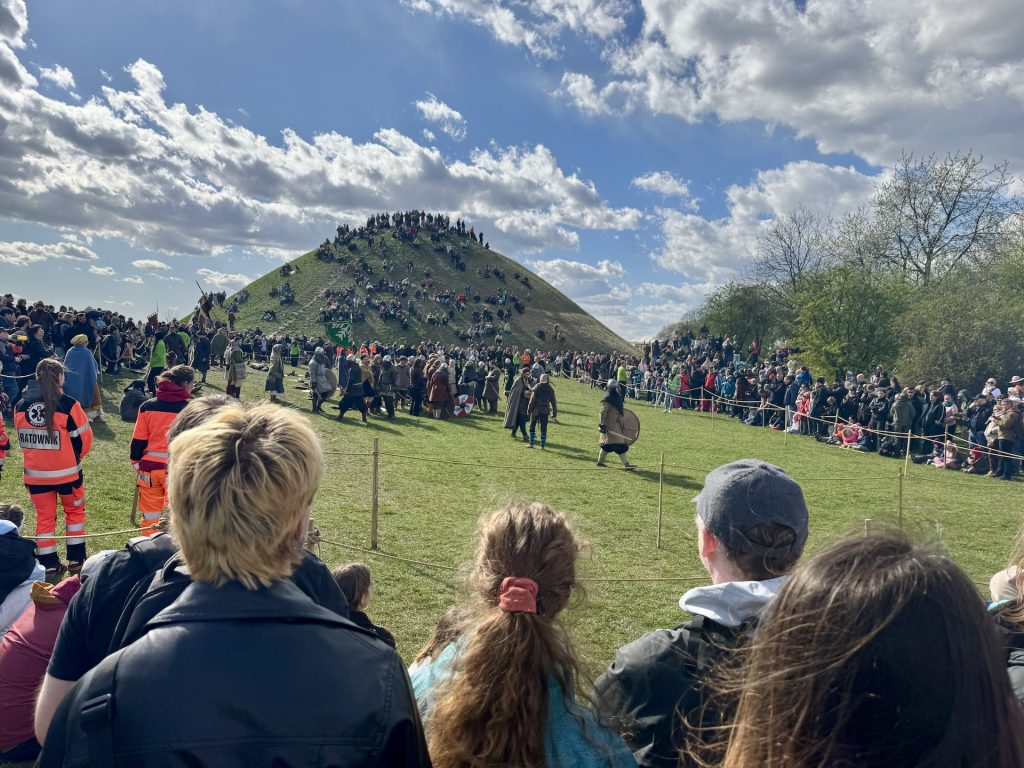
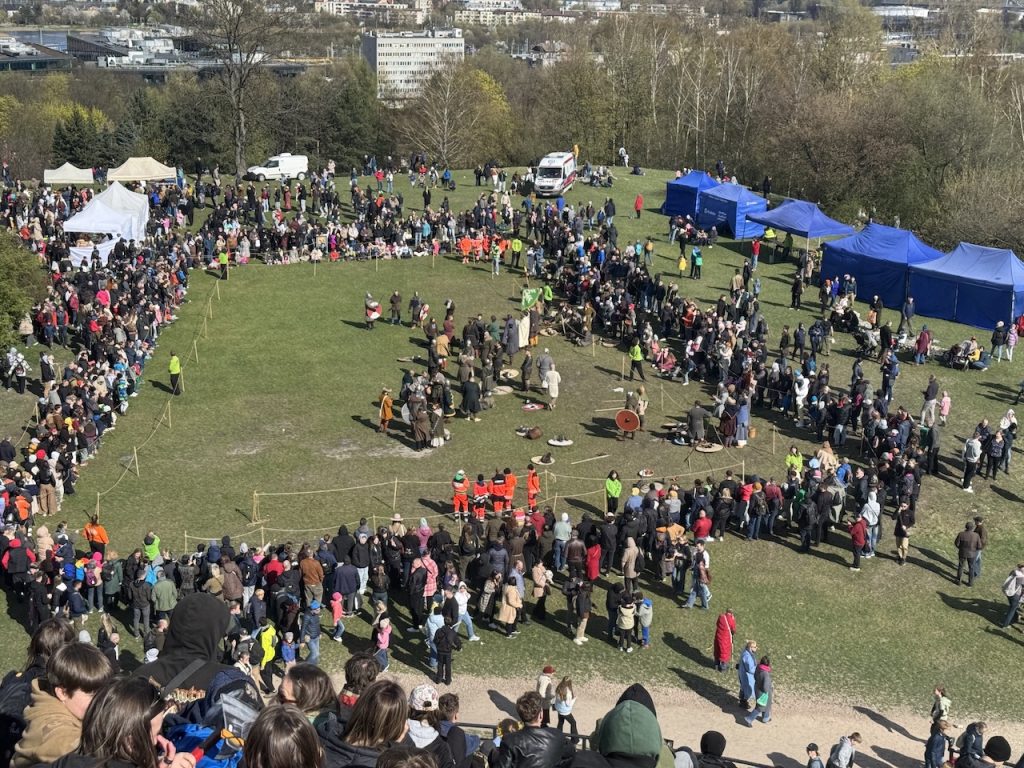
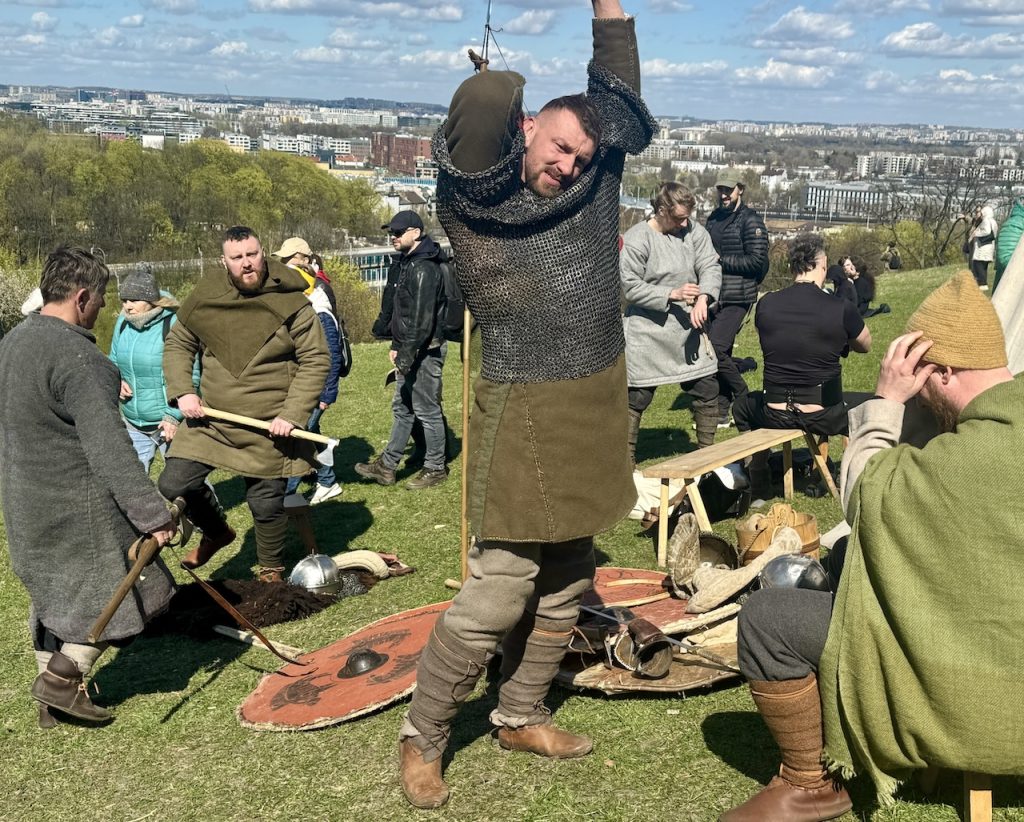
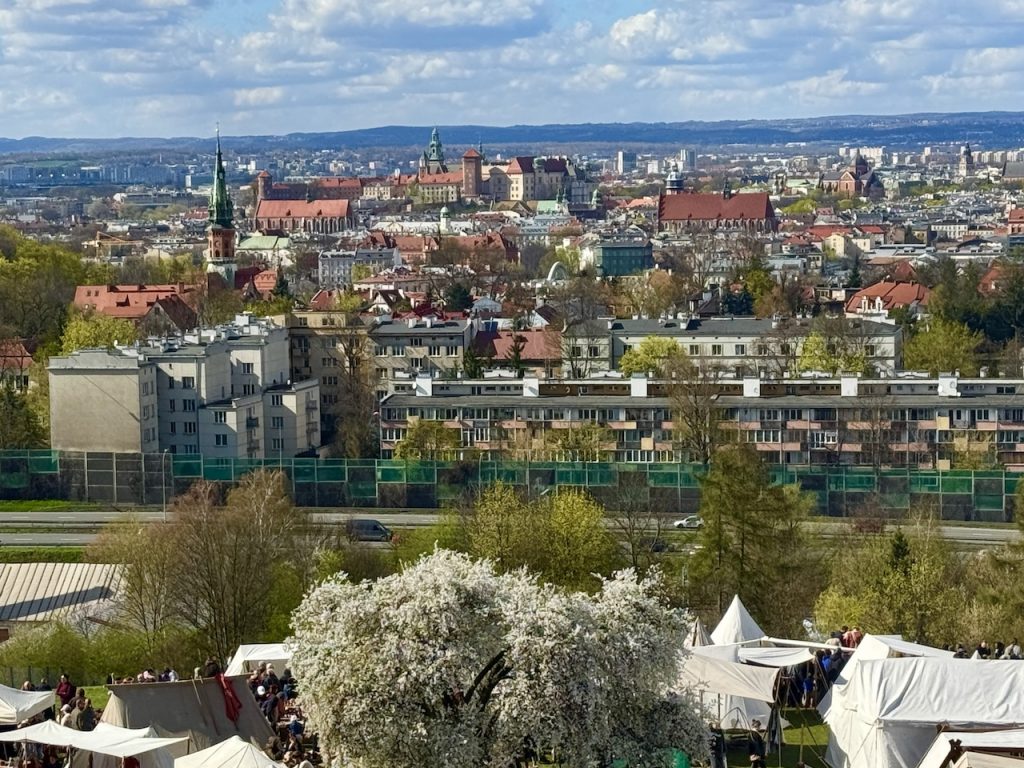
St. Benedict Church still holds its patron’s day feast on Easter Tuesday. But since 2001 a new outdoor secular festival “Traditional Rękawka Festival at the Krakus Mound” is also held there. The festival, organized by the Podgórze Cultural Center, is intended as a throwback to pre-Christian times and somewhat resembles the Renaissance festivals held in the US, but its themes are Slavic medieval customs, traditions and ways of living. One of the main festival organizers is the Vistula Warriors’ Team KRAK. They are responsible for the reenactment of battles and skirmishes which are “fought” throughout the day, and which are attended also by other such groups from all over the country. Before the fights, the warriors, wearing chainmail with traditional garb made of heavy felt, leather and linen under it, and equipped with weapons, run around the mound. There are tent settlements, people dressed in stylized clothing hang about, while men, in conversations with other “warriors”, refer to their female companions as “my woman”. There are vendors selling pottery as well as leather shoes and bags, all very eager to educate the visitors about the old ways of making them. Last Tuesday the most popular items seemed to be toy swords (miecze), shields (tarcze), bows (łuki), arrows (strzały) and quivers (kołczany). While swords and shields were preferred by boys, girls had fun with the bows and arrows. All kids were encouraged to participate in supervised fights, preceded by instructions and many were seen in improvised fights under the watchful eye of their parents.
It was another very windy and cold day in Kraków, nevertheless the visitors enjoyed climbing the mound which offers a great view of Kraków and of the fights, learning about old traditions, and eating – the usual fare at such events – grilled sausages, “zapiekanki” and bread with lard and dill pickles. The free of charge (and alcohol) festival is geared toward families hence there were many other activities for children, including quill writing and pottery lessons.
Overall, the festival offers a fun, interactive and educational experience. During the last few decades, the old Slavic beliefs and practices have gained a great many enthusiasts, hence the growing popularity of this spring outdoor festival.
More about this year’s Rękawka Festival: https://www.ckpodgorza.pl/aktualnosci/tradycyjne-swieto-rekawki-2026-zbrodnia-i-kara