In January of 2026 we sent out a short survey to our local Polish dance groups. We are happy to report that all 15 groups we approached answered the questionnaire. We are very grateful to the group directors and teachers for participating in the survey.
It took us longer that expected to gather and compile the answers. Below you will find the findings gleaned from the survey. The groups’ individual responses have been published as a separate document.
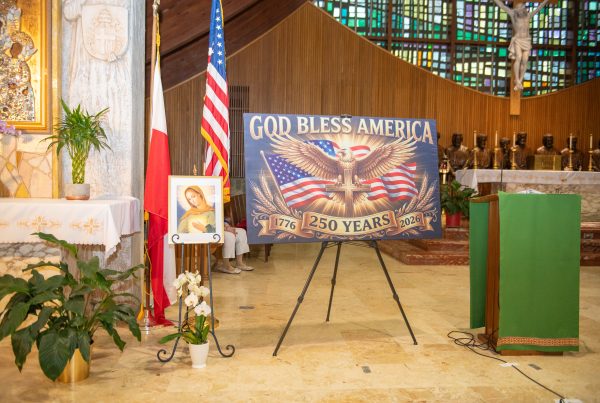
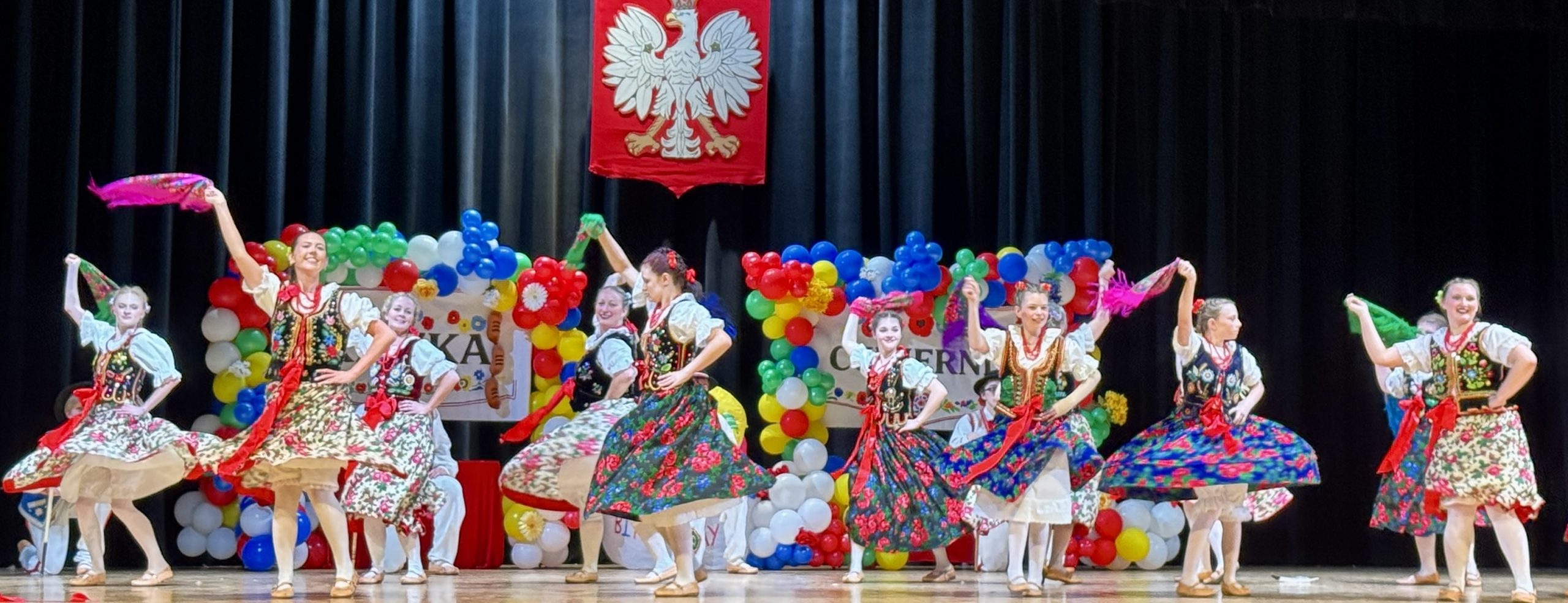
Like the Polish language schools, Polish folk dance groups constitute one of the very important pillars as well as a valuable asset of our community. By teaching kids, youth and adults not only Polish folk dances, but also other aspects of Polish culture such as history, geography and even Polish language, they offer a unique immersive cultural experience. They also create a space for social interactions, where young people form life-long friendships and learn how to be a part of the group. The most compelling testimonial to the strength of these bonds might be the fact that among the current dancers we find children and grandchildren of the former dancers, the “graduates”. ”The graduates” take the youngsters to dance practice, organize fundraisers, make costumes but on occasion also enthusiastically dance during annual group recitals. Folk dance groups travel on heritage trips to Poland to such festivals as Iwonicz Zdrój and Rzeszów, as well as attend folk festivals in the US, while the groups’ choreographers attend courses in choreography in Poland and the US, and continuously improve their skills. With authentic, colorful costumes and energetic and joyful performances Polish folk dance groups complement and elevate Polish American events as well as represent and promote Polish culture to a broader American audience. You can watch them dance at the festivals and parades. One of the occasions which bring them together is the annual blessing of the Polish American Dance Ensembles, which this year was held for the 23th time at St. Hyacinth Church in Detroit. Over 100 dancers and dance instructors attend this beautiful ceremony. Please watch the video: https://www.youtube.com/watch?v=PTmDSbsJqt8
This overview is divided into four parts. The are:
1. Survey goals and questions
2. Survey findings
3. Numbers at a glance
4. Individual reports from each of the fifteen dance groups (a separate document, available at: https://polishweekly.com/detroit-area-polish-folk-dance-groups-in-2026-individual-reports-from-15-dance-groups/).
1. SURVEY GOALS AND QUESTIONS
The goals of the survey were to find out how well the Polish folk dance groups were doing at the end of 2025, to assess their strengths and challenges. By publishing the survey findings as well as the individual reports in their entirety we hope to facilitate better knowledge and appreciation of what the groups do, promote their work and recognize their importance to the life of both our Polish American as well as to the broader American communities.
THE SURVEY QUESTIONS:
1. When and by whom was your dance group established?
2. How many students did you have at the end of 2025? Who are your students? Do they come from Polish-speaking families, first-generation Polish Americans, or from different backgrounds (ethnically mixed families, the second generation of Polish Americans, etc.)?
3. Where do you hold practice?
4. Did the number of students increase, decrease or stay the same in the last two years? If you can, please elaborate on possible causes for this situation.
5. How many instructors does your school employ?
6. Did the number of the instructors increase, decrease or stay the same in the last three years? If you can, please elaborate on possible causes for this situation.
7. What do you consider your biggest achievements of the last two years?
8. How do you see the future of your dance group in the next two years?
9. What do you consider your biggest challenges in the next two years?
10. What are the sources of funding for your activities? Are they sufficient?
11. Please share with us anything else you feel is important and what was not covered in this questionnaire.
2. SURVEY FINDINGS
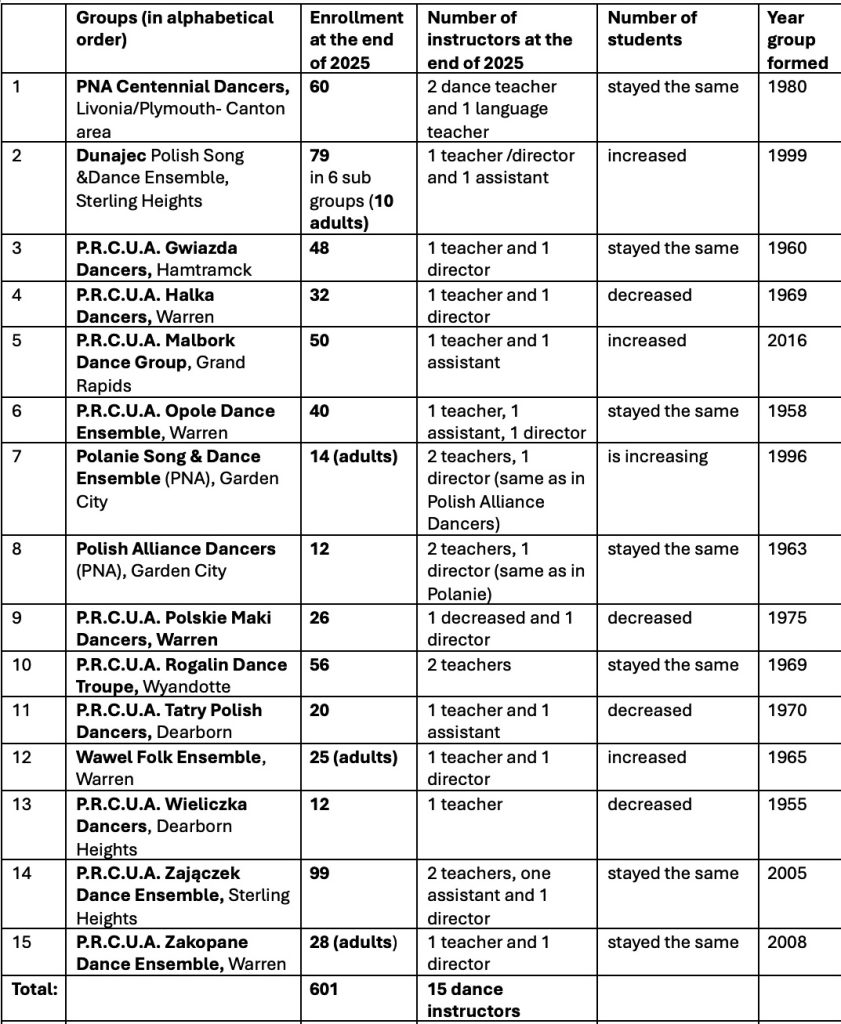
– At the end of 2025 in Metropolitan Detroit and Grand Rapids, there were 15 Polish folk dance groups (counting “Kozice”, “Mały Dunajec” and “Mireczki” as subgroups of “Dunajec”); 10 of them affiliated with the P.R.C.U.A., 3 with the PNA, one with a Roman Catholic parish (“Dunajec”) and one (“Wawel”) not affiliated with any organization.
– In total we had 601 youth and adult dance students, taught by 15 dance teachers/choreographers, helped with assistants.
– The oldest group is “Wieliczka” (Dearborn) established in 1955; the youngest is “Malbork” (Grand Rapids), established in 2016. Up to 1965, the year when the first adult dance group “Wawel” was founded, Polish folk dance groups were exclusively for children and youth. Now we have 4 adult dance groups: “Wawel”, “Zakopane”, “Polanie” and “Kozice”.
– The good news is that vast majority of the groups (11) reported that during the last two years their enrollments either stayed the same (7) or increased (4).
– The survey revealed a lot of enthusiasm and pride in the groups’ activities and achievements as well as the very strong commitment of the groups’ directors and teachers/choreographers to their work.
– Out of the 4 groups which reported decreased enrollments, two “Wieliczka” and “Tatry”, cited the changing demographics of their respective cities (Dearborn and Dearborn Heights) as the main cause of the decrease. Two others, “Halka” and “Polskie Maki”, both out of Warren, stated sports and other children’s activities, which compete for children’s time, especially on Saturdays when the dance practice is held, as the main cause of decreasing participation.
– The P.R.C.U.A. groups expressed their apprehension about the changed way the groups are going to be subsidized by the P.R.C.U.A. and fear of a possible negative effect of the changes on their operations in the near future.
Among other concerns expressed: the state of the economy and rising costs of rent and costumes (tariffs being a factor), and lack of sufficient involvement of parents.
3. NUMBERS AT A GLANCE
4. Individual reports from each of the fifteen dance groups:
https://polishweekly.com/detroit-area-polish-folk-dance-groups-in-2026-individual-reports-from-15-dance-groups/