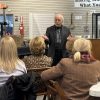

The Hamtramck Historical Museum drew over 30 “Hungry for History” patrons Thursday night to Professor John Bukowczyk’s lecture “”Love, Romance, Status and Domestic Power: Polish Women – the Countryside to the City”. “Hungry for History” is a program the Museum created a few years ago and which, after a hiatus, was restarted with Professor Bukowczyk’s talk. Over 20 people, hungry for history and Polish food, came at 6 pm to have a boxed dinner catered by the nearby “Polonia” restaurant, while more joined at 7 pm for the lecture itself.


For an hour Professor Bukowczyk, a retired WSU history professor and author of many groundbreaking publications about Polish Americans, weaved a captivating, and to many a very relatable, tale of the immigrant experience of Polish women at the end of the 19 th and the beginning of the 20th centuries.
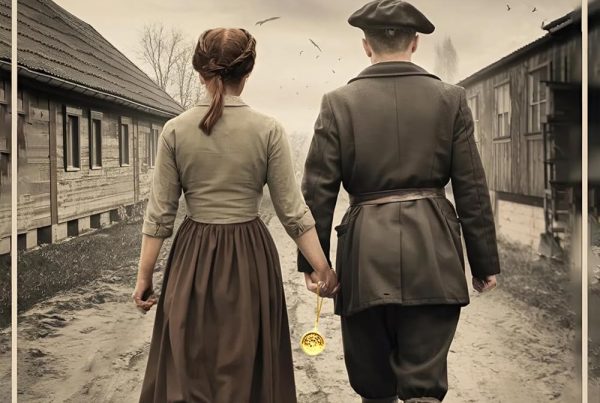
Starting with a vivid picture of the harsh life in Polish villages: patriarchal, limiting, backward and dirt-poor by Western European standards – not much bucolic or cute about it, even if there was some inherent aesthetics in it too – and then describing perhaps the equally hard lives of the women as they became the first generation of Polish Americans, Professor Bukowczyk delivered a comprehensive and powerful talk enriched with a few personal vignettes. As Professor Bukowczyk mentioned at the beginning, due to the lack of written records such as diaries, etc., this remains a very incomplete story, abundant in speculation and educated guesses.
Perhaps everyone in attendance walked away from the lecture with something else to remember, be it a new piece of information about Polish American history, or a realization of how much their family history reflects or fits into the broader historical narrative. Who knew, for instance, that from Western Poland families usually immigrated, while from the Eastern lands single men and women did. Or thought about how different the status of old women in the “New World” was, compared to their lot in the Polish lands. Due to poverty, in Polish villages it was not uncommon for old people to be driven out of their homes and left to fend for themselves, which often meant begging, while in much richer America, old women – and women usually outlived the men – were treated like founts of folk wisdom and the keepers of cherished Polish traditions. It was also very interesting to learn that the first generation of Polish women coming to America at the time were seldom employed as domestic help but sought jobs in light industries such as sewing or cigar rolling. They might have been forced to do so, as the domestic service was already saturated with other immigrants, and there was prejudice against Polish newcomers. But one cannot rule out that they might also prefer such jobs, as they gave them much more personal freedom, than working in service. Young women once they got to the States, became more assertive and did not want to be controlled by the patriarchal culture.
While single, Polish women worked in the factories, but once they got married and gave birth to their first child, they did not continue to work. It does not mean, however, that they stopped earning money for their households. They continue earning money by taking in boarders or lodgers; a very demanding job, requiring – for example – laundering heavy work cloths soiled with oil and dirt.
This part of the tale especially resonated with Patty Malski, who recognized in it the story of her husband’s mother who had lodgers in her house.
Professor Bukowczyk’s maternal grandmother, however, when she arrived in the States at the age of 16, found a job in service, working for a Jewish family. Her education was at the fourth-grade level, while her daughter, one of only five children, who reached adulthood out of the ten she bore, obtained a high school diploma. This illustrates how the second generation of Polish American women got a better education which led to more opportunities than their mothers had. Still, due to pervasive discrimination against Poles, Bukowczyk’s mother could not get a job commensurable with her education. Interestingly Professor Bukowczyk is of the opinion that even now the Polish ethnic group has a relatively low status in the US, an opinion which was not shared by some members of the audience. Upward mobility of Polish immigrants was often mentioned in the talk. One way in which women were able to elevate their status, was by marrying outside the Polish ethnic group and shedding their revealing Polish names.
In Professor Bukowczyk’s tale there were also heroic Polish wives who threw themselves between their striking husbands and the police or staged protests of their own. One such example is the 1935 “Butcher Boycott” in Hamtramck during which women successfully demanded the lowering of the price of meat and to this end not only boycotted the stores but on occasion also destroyed the meat.

When the lecture was over, people hung around and embraced the chance to have an informal conversation with Professor Bukowczyk and share their stories with him: an obvious sign that the lecture was very well-received and appreciated.
Professor John Bukowczyk is the author of And My Children Did Not Know Me: A History of the Polish Americans (Indiana University Press, 1987), Polish Americans and Their History: Community, Culture, and Politics ( University of Pittsburg Press, 1997), A History of Polish Americans (Routledge, 2008), and numerous articles on the topics of Polish American history and immigration. He recently co-edited (with Halina Filipowicz) the volume Pole/Jew History, Literature, Identity, Future (Ohio University Press, 2025).