Continued from Part 2
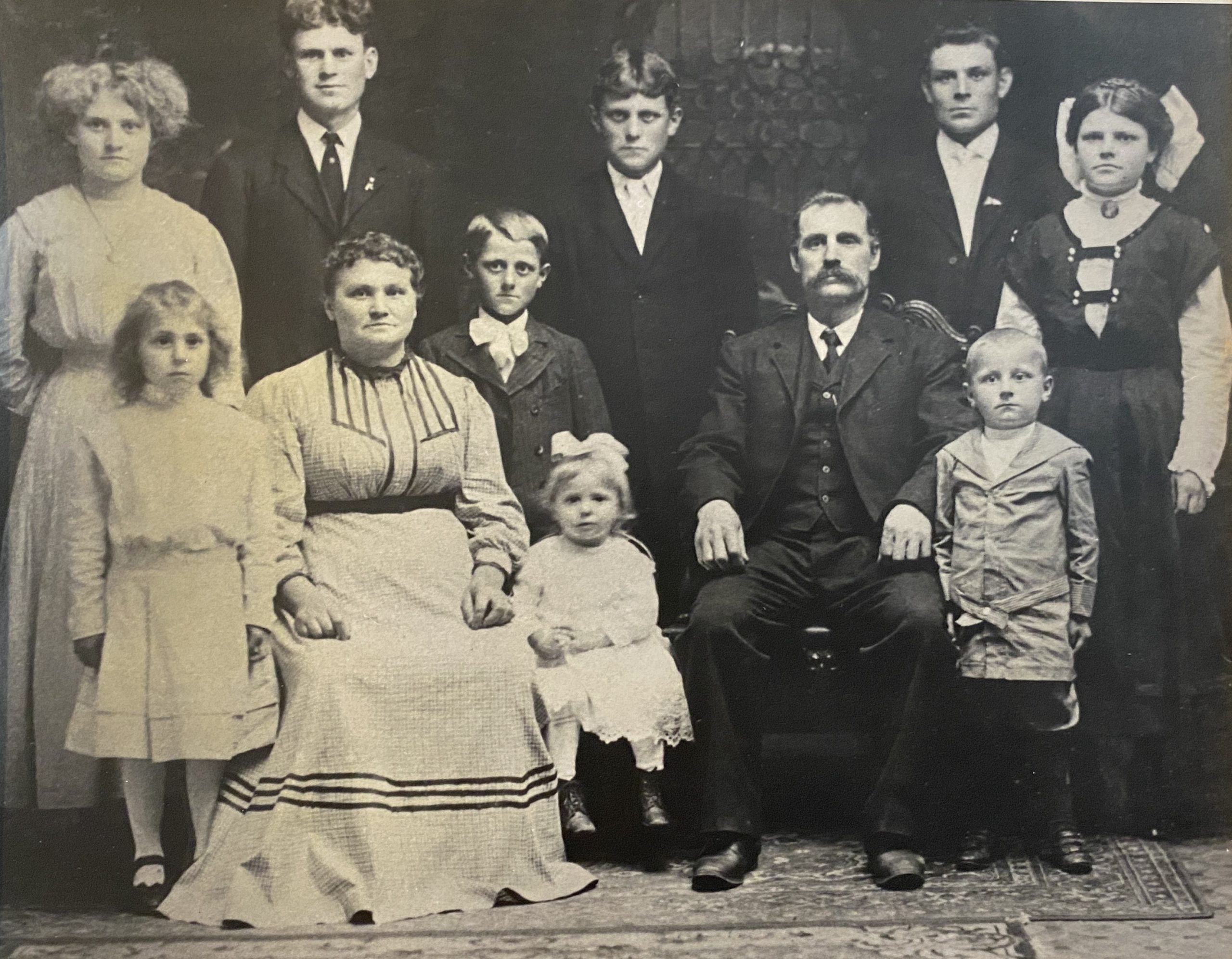
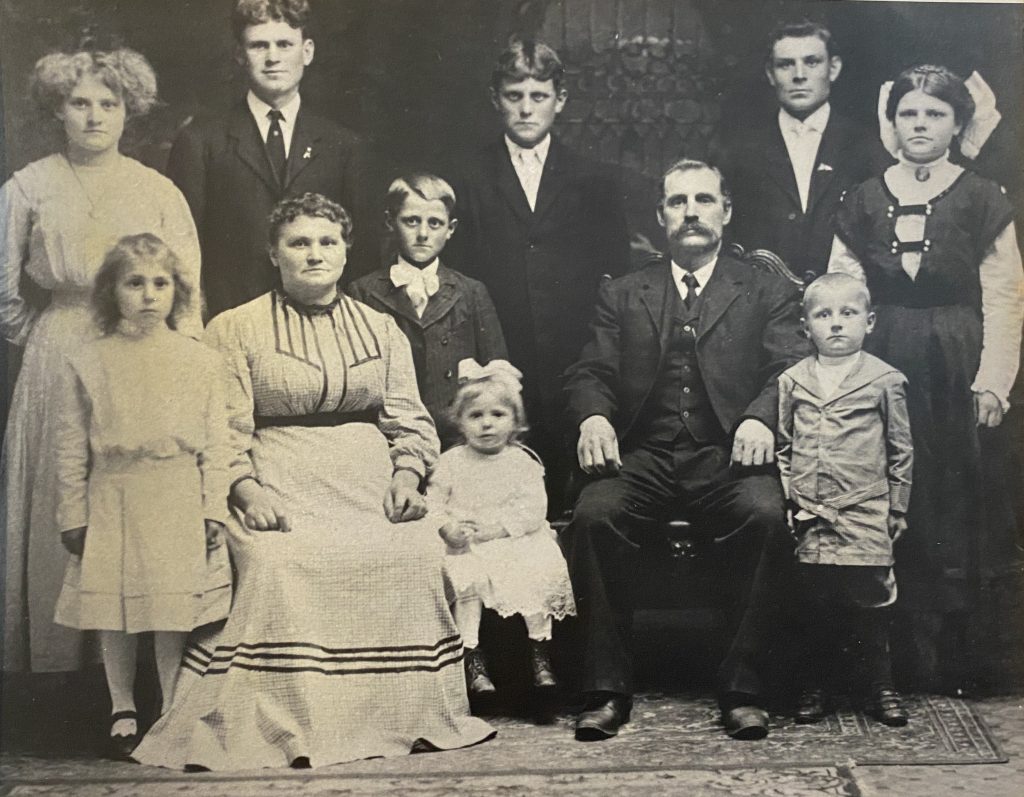
Holy Cross is the resting place for people who were the backbone of Detroit’s industrial boom of the late 1800’s that fostered a migration from central and eastern Europe following the Civil War. These people came to America with little or nothing and built lives for their families through hard work and perseverance. Frank and Pauline Czapiewski left East Prussia around 1890 after Frank’s service in the Prussian army, bringing with them their 3 young children, Frank, Mary, and Joseph. The Czapiewskis, who spoke both Polish and German, first settled with a cousin on Detroit’s east side, burying young Frank and Mary in Mt. Olivet following their deaths from the unfortunate childhood diseases of the day. Eventually the family moved to Wendell Avenue on the southwest side not far from Holy Cross, in a home that they owned according to the 1900 census. The family ultimately added 10 more children, 8 of whom reached adulthood and most of whom were auto workers. In December 1903 and January 1904, Frank and Pauline experienced the joy and sorrow of welcoming baby Helen and saying goodbye to young Alexander and Martha, both victims of diphtheria and interred at the Holy Cross Mission graveyard.
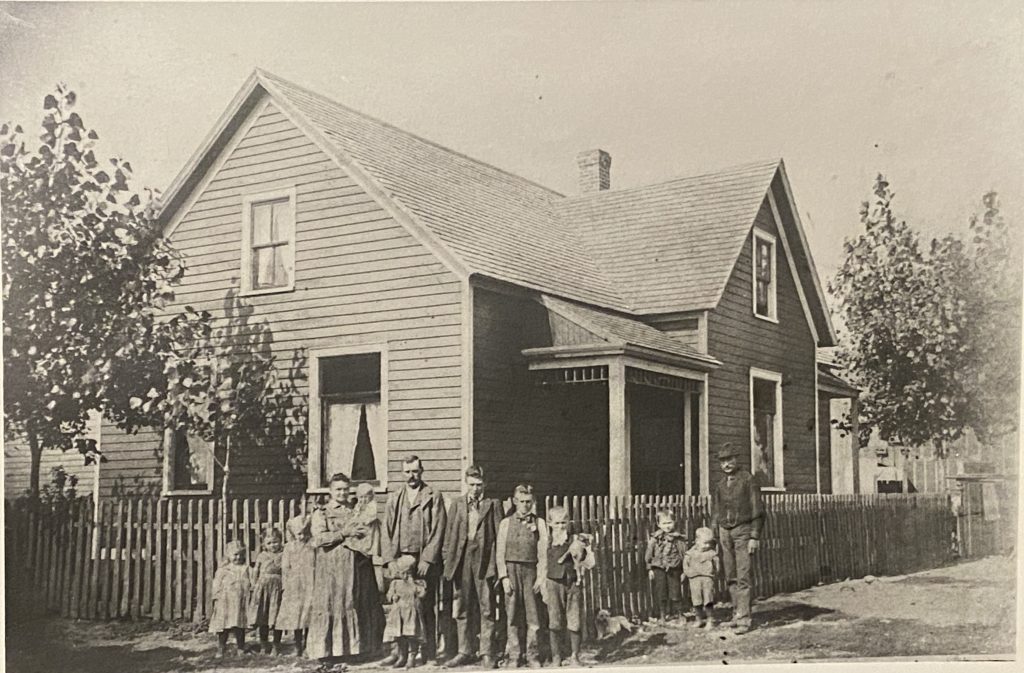
Frank, a farmer in Europe, worked as a laborer at what jobs he could find to support his family, finally achieving stability at nearby Woodmere Cemetery, where he worked for 40 years as a gravedigger and later a groundskeeper. He spoke basic English, and Pauline, who spoke little if any, lived in the house on Wendell until the early 1940s, when they passed away within a year of each other and were laid to rest at Holy Cross not far from Alexander and Martha.[i] The family homestead, along with a second house on Wendell, remained in the family, with many of their children remaining in the local neighborhood.
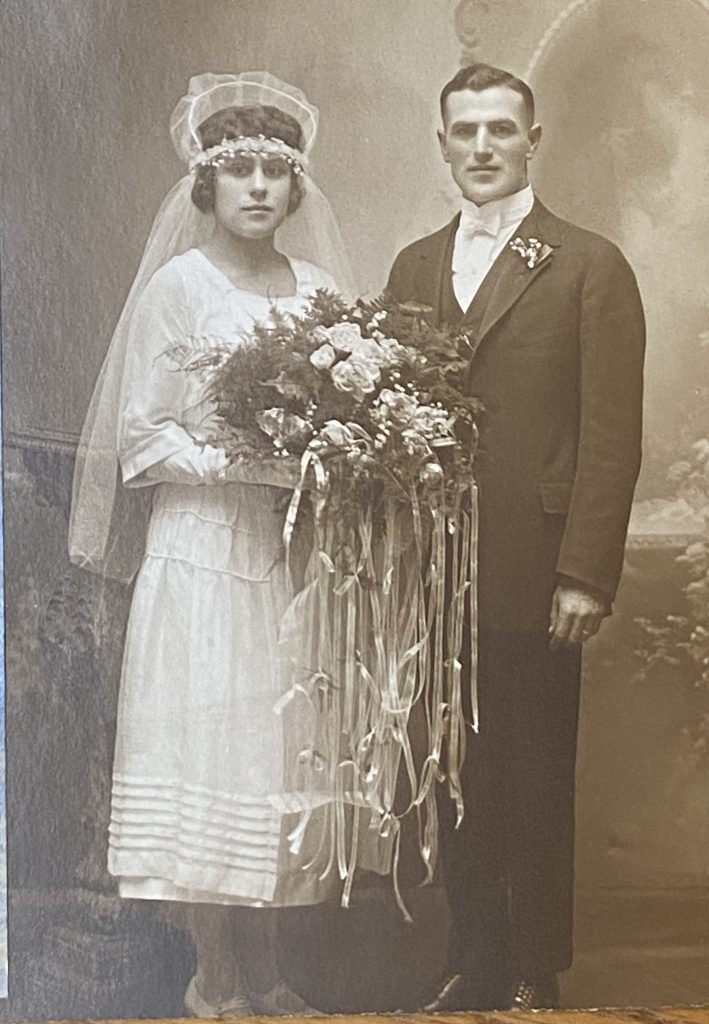
Their daughter Helen lived with her husband Anthony (“Tony”) Swantick and their children across the back alley on Pearl Street. Helen was fortunate enough to have an 8th grade education through the local schools, working in sales and clerical positions, and in 1921 marrying a guy from down the street who was 8 years her senior.
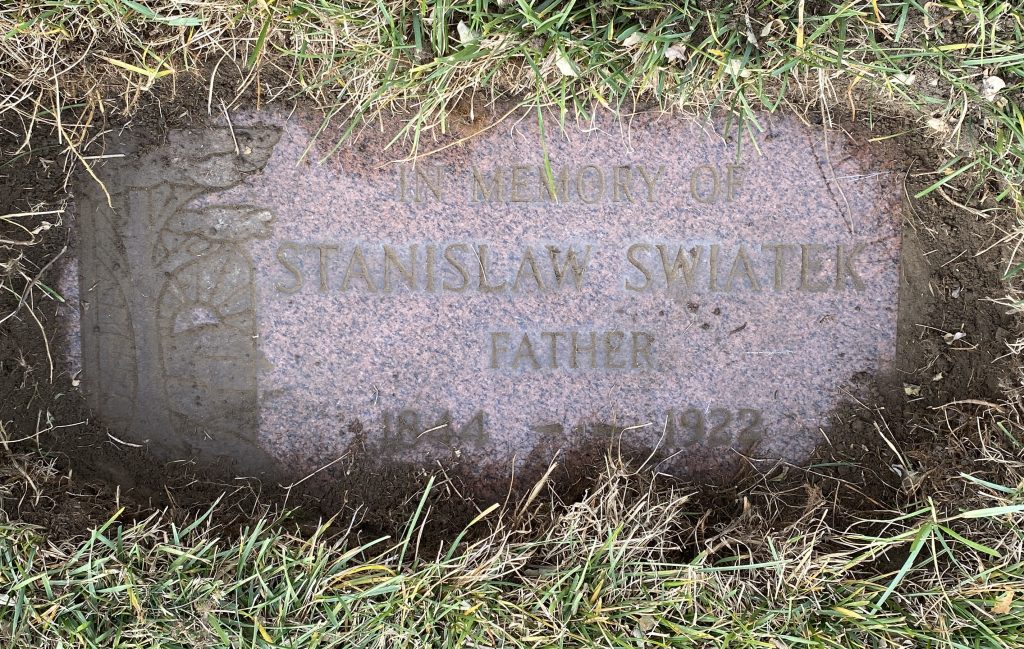
Tony’s parents, Catherine and Stanislaw Swiatek, migrated from Lviv in Polish Galicia, now part of Ukraine, in the early 1880s. Catherine died in 1897 and was interred at the Holy Cross graveyard, leaving Stanislaw, a laborer who spoke no English, with 6 children ranging from ages 2 to 19. He worked a variety of jobs, with one ironically being as a gravedigger at Holy Cross, passing away in 1922 and being interred a stone’s throw away from his wife.
After his mother’s death, Tony, the youngest, lived with the oldest, Antoinette, going to school through the 3rd grade. He left school to work in the Lonyo brickyard to support the family, his education completed by reading newspapers and books. He would eventually be drafted into the Army Ordnance Department, spending a year in France and Belgium during the World War, where his home knowledge of German made him useful in guarding prisoners.
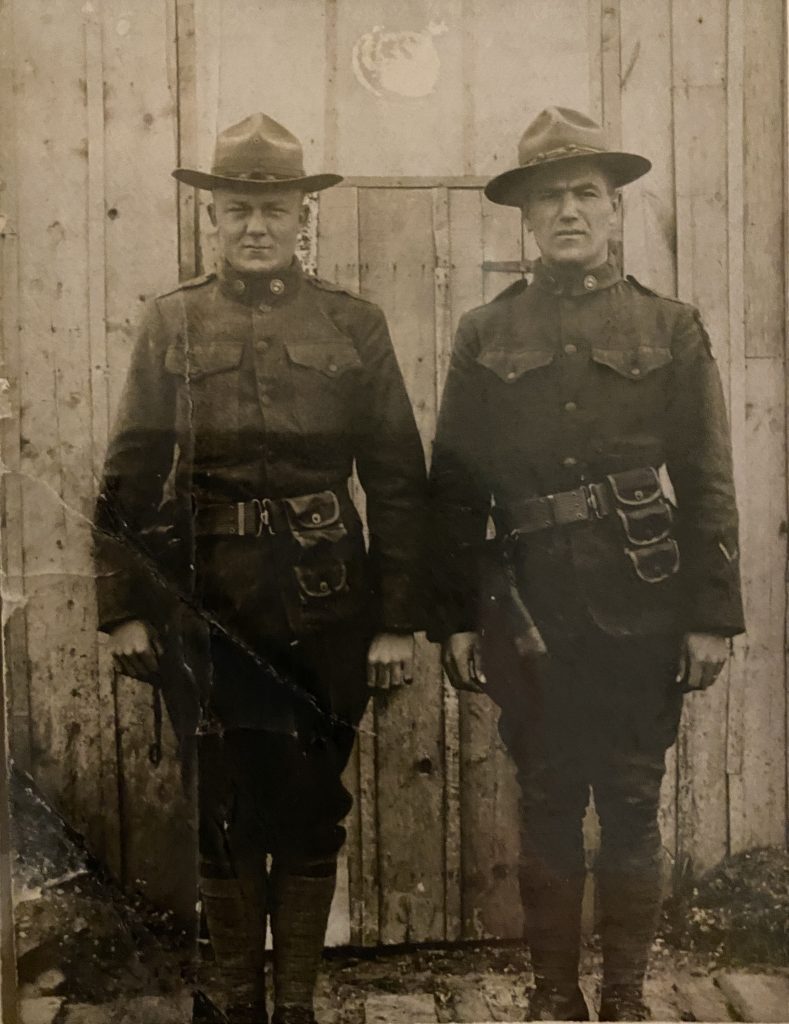
He later had a storied career with the Detroit Police Department, earning the Walter Scott Distinguished Service Medal for valor following a 1942 off-duty shootout with armed robbers in a Springwells Avenue bar. Tony succumbed to lung cancer in 1947 after a too-short retirement of 2 years, and is interred with Helen, who lived on Pearl Street until her death in 1991, surrounded by the graves of many working-class Detroit boys who didn’t make it through the next, greater war.[ii]
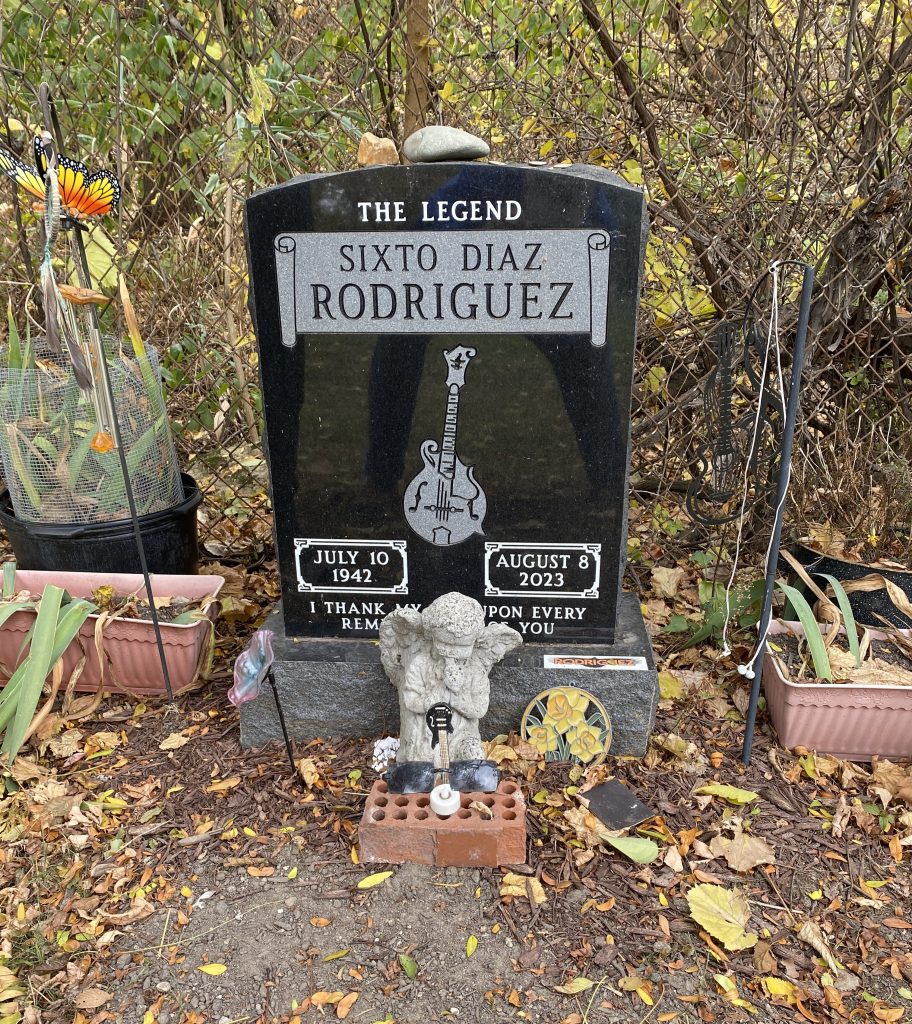
Even in modern times there are those who have lived with humility in spite of their achieved status. Sixto Rodriguez, known by the mononym Rodriguez, was a native Detroit folk musician who was never well known or commercially successful in the United States at the time of his recording career in the early 1970s. Unbeknownst to him, however, his work enjoyed immense popularity in Australia, New Zealand, and South Africa. His album At His Best went platinum in South Africa in the late 1970s, where his anti-establishment themes struck a chord with younger white Afrikaners who were opposed to apartheid. During this period, Rodriguez was living a simple but rich life, working construction around Detroit, giving characteristically enigmatic performances at local venues, and supporting progressive political causes, including his own campaigns for mayor and city council, completely unaware of his overseas renown. In the mid-1990s two South African fans investigating fictitious rumors of his death “rediscovered” Rodriguez in Detroit, and a South African tour revived his international popularity. But to Americans, he was still a relative unknown until the release of the 2012 Academy-Award winning documentary Searching for Sugar Man, which chronicled him, his impact on South Africa, and the search. The film’s success ignited Rodriguez’s American career and led to multiple tours and the fame that had eluded him decades before.[iii] But he remained as humble after achieving fame as before, telling the Sunday Telegraph “My story isn’t a rags to riches story. It’s rags to rags, and I’m glad about that. Where other people live in an artificial world, I feel I live in the real world. And nothing beats reality.”[iv]Rodriguez passed away in 2023 and is interred near Tony and Helen Swantick, amongst many others who lived simple but significant lives.[v]
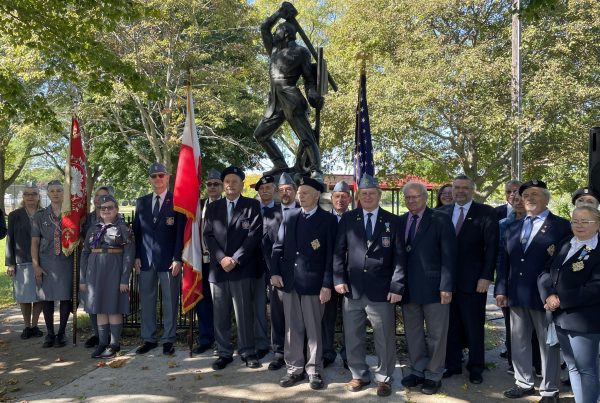
Holy Cross today reflects the historical changes in Detroit’s industrial base and demographics. While still active, its office is shuttered and its administration handled by another diocesan cemetery. Those buried there live on, though, in the diligence, talent, and hard work that they brought to their modest lives to make things better for their families and for others. It was for this reason that those 75 gathered last August to celebrate Holy Cross’s 150 years as part of Southwest Detroit’s identity and to thank its residents for the legacy that they have passed on.
[i] Mary Swantick and Helen Swantick Mathews. Family History Interview. Cassette. Detroit, Michigan, 1986.
[ii] Ibid, 7
[iii] Aimery, Jakkar. “Fans, Friends, Family Remember Detroit Musician Sixto Rodriguez at Memorial Service.” The Detroit News, August 13, 2023. https://www.detroitnews.com/story/entertainment/music/2023/08/12/fans-friends-family-remember-detroit-musician-sixto-rodriguez-at-memorial-service/70572019007/.
[iv] Genzlinger, Neil. “Rodriguez, Singer Whose Career Was Resurrected, Dies at 81 (Published 2023).” New York Times, August 9, 2023. https://www.nytimes.com/2023/08/09/arts/music/sixto-rodriguez-dead.html.
[v] Hightower, Brendel. “Church Leaders, Entertainers among Notable Figures Michigan Lost in 2023.” Detroit Free Press, December 31, 2023, sec. A.
About the Authors
Gavin Swantick is a local historian with several articles published in magazines such as Michigan History. He has a master’s degree in Anthropology from Wayne State University and has worked in many local museums.
Steve Swantick is a retired automotive engineer who grew up on Woodmere Avenue in Southwest Detroit. He has a strong interest in local history and genealogy and has been fortunate to collaborate with his son Gavin on several projects. Steve’s maternal great-great grandfather, Antoni Skoczek, was one of the founders of “Dziennik Polski.”